

What would an Indian festival really be without a plate of mithai making its way around the room? Somewhere between the diyas being lit, the puja thali being prepared, and relatives arriving unannounced, someone always asks the same question: has the sweet box arrived yet? For most Indian households, that box isn't complete unless it holds two absolute classics Besan Laddu and Coconut Burfi. They aren't flashy or trend-driven the way some modern desserts are, but that's exactly the point. They carry the smell of a mother's kitchen, the shine of ghee catching the light, and the kind of nostalgia that no fusion mithai has managed to replace.
With Ganesh Chaturthi 2026 arriving on Monday, September 14, and the ten-day Ganapati festivities running through Anant Chaturdashi on September 25, festive planning across India is already in full swing. This is the season when kitchens get busy, guest lists get longer, and sweet boxes start doing the rounds again. So this blog takes a closer look at what makes Besan Laddu and Coconut Burfi so timeless, why Chaina Ram Sweets from Chandni Chowk makes a version worth ordering, and how DeliciousKart's Double Delight Festive Collection can make festive shopping considerably easier this year.
Why Festive Mithai Trays Feel Incomplete Without Besan Laddu and Coconut Burfi
There's a reason these two sweets show up at nearly every Indian celebration, from Ganesh Chaturthi and Diwali to weddings, Raksha Bandhan, and even simple Sunday family lunches. They represent two very different regions and traditions of Indian sweet-making, yet they somehow complement each other perfectly on the same plate.
Besan Laddu brings warmth roasted gram flour, ghee, and cardamom rolled into a soft, grainy ball that practically dissolves on the tongue. Coconut Burfi brings brightness the natural sweetness of coconut set into a firm, fudge-like square that's a little chewier and a little more refreshing. Put them side by side in a sweet box, and there's something for everyone: the person who loves rich, nutty flavours, and the person who prefers something lighter and more delicate.
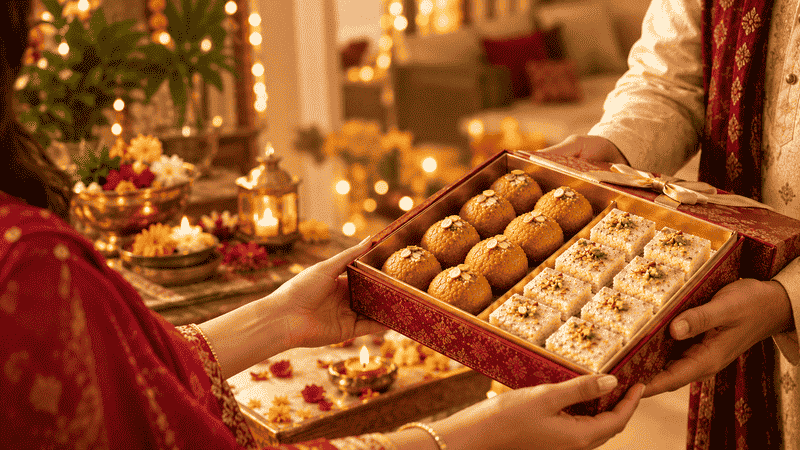
They're also two of the easiest sweets to gift. Neither one requires refrigeration in the short term, both travel reasonably well, and both are instantly recognisable, so there's rarely any need to explain what's inside the box. For festive gifting across India, that familiarity matters as much as the taste itself.
The Story Behind Besan Laddu: India's Most Cherished Gram Flour Sweet
Laddus, in one form or another, have been part of Indian food culture for centuries. Historians tracing early Indian confections have noted that small rolled "food balls" made from legumes and grains existed as far back as the Indus Valley Civilisation, and later Sanskrit texts describe similar sweets being used in both celebration and traditional medicine. Over time, this simple format evolved into dozens of regional variations, but besan laddu remains one of the most widely made and widely loved versions across the country, according to background compiled on the sweet.
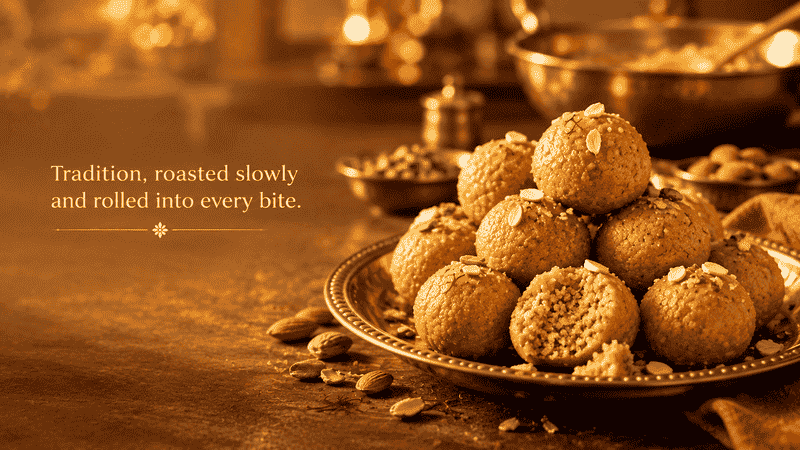
The process itself hasn't changed much, and that's part of the charm. Gram flour, or besan, is slow-roasted in ghee until it turns a deep golden colour and releases a distinctly nutty aroma a step that Indian home cooks will tell you cannot be rushed without ruining the texture. Once the flour has cooled slightly, sugar and cardamom powder are folded in, and the mixture is rolled into round, dense balls, often finished with a scattering of chopped dry fruits. It's worth noting that besan laddu is also closely tied to Ganesh Chaturthi specifically, since many households prepare it alongside modak as part of the festival's traditional offerings, a pairing well documented by home cooks who make both sweets during the festival.
What makes besan laddu genuinely special is how forgiving and versatile it is. It keeps well for days in an airtight container; it doesn't need any last-minute assembly, and it tastes just as good as an everyday treat with evening chai as it does sitting on a puja thali. Few Indian sweets manage to be both deeply festive and comfortably ordinary at the same time.
What Makes Chaina Ram's Besan Laddu Worth Ordering
Not every besan laddu is created equal, and anyone who has tasted a dry, overly sweet, mass-produced version knows the difference immediately. Sweets' Besan Laddu available through DeliciousKart, is prepared with roasted gram flour, pure desi ghee, sugar, and aromatic cardamom, using the kind of slow-roasting method that gives it a rich, nutty aroma and a genuinely soft, melt-in-the-mouth texture rather than the crumbly, dry bite that cheaper versions often have.
Chaina Ram Sweets itself carries serious credibility in Delhi's mithai world. The Chandni Chowk name has been associated with traditional Indian confectionery for generations, and that heritage shows in the details the laddus arrive garnished with premium dry fruits, hygienically packed to stay fresh, and made using recipes that haven't been diluted for mass production. At 500 grams per pack, it's a practical size for a family celebration, a small gifting box, or simply restocking the festive sweet jar at home before guests start arriving.
For anyone specifically hunting for an authentic Besan Laddu that tastes closer to what a grandmother would make than what a supermarket shelf usually offers, this is a solid, reliable pick heading into the festive weeks.
Coconut Burfi: The Nariyal Sweet That Ties South and North India Together
If besan laddu represents comfort, coconut burfi represents celebration in its purest form. Known by different regional names nariyal barfi in the north, kobbari burfi and tengai burfi further south this sweet is made almost everywhere in India, and coconut itself holds a genuinely sacred place in Indian tradition, frequently used in religious offerings and considered one of the most auspicious foods across Hindu households.
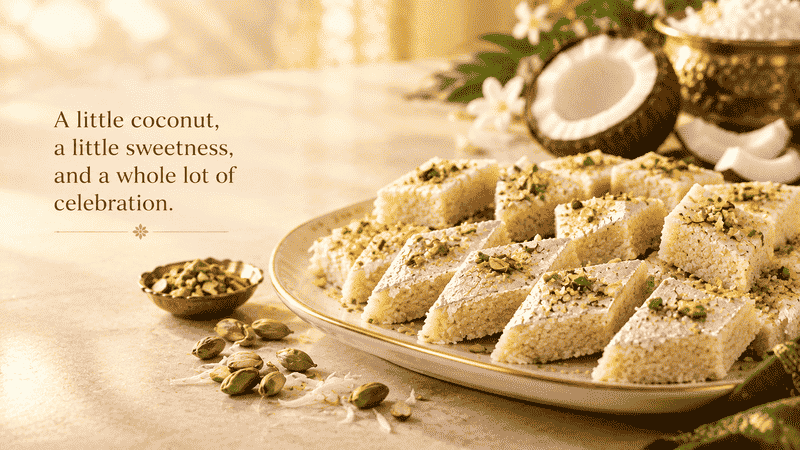
At its simplest, coconut burfi is just grated coconut cooked down with sugar (or condensed milk, depending on the recipe) and a touch of cardamom, until the mixture thickens enough to be pressed flat and cut into neat squares. Some versions lean rich and fudgy using khoya or condensed milk, while others stay lighter and more traditional using just coconut, milk, and sugar, a distinction well explained in recipe breakdowns of the different styles of coconut burfi made across Indian kitchens. Either way, the result is a fudge-like sweet with a distinct bite from the shredded coconut softer than a hard candy, but firmer than a laddu.
Coconut burfi also shows up frequently during fasting periods and Vrat occasions, since coconut is considered permissible and pure during many religious observances, which is part of why it appears so consistently across festivals like Janmashtami, Navratri, and of course Ganesh Chaturthi.
What Makes Chaina Ram's Coconut Burfi Stand Out
Chaina Ram Sweets' Coconut Burfi, also available through DeliciousKart, is handcrafted using traditional recipes rather than shortcuts, which is immediately noticeable in the texture soft, properly set, and genuinely rich in coconut flavour rather than tasting mostly of sugar. It's built for exactly the kind of festive occasion India is heading into right now, whether that's a puja spread, a family celebration, or simply a craving for something sweet on a Sunday evening.
Priced sensibly at 500 grams, and currently available at a discount on DeliciousKart, this coconut burfi holds up well next to homemade versions, without asking anyone to spend an entire afternoon in the kitchen roasting and stirring coconut over a hot stove. For households that want the taste of tradition without the effort of preparation, ordering it online is a fairly easy trade-off to make.
Besan Laddu vs Coconut Burfi: How They Differ (and Why They Pair So Well)
It's worth breaking down exactly what separates these two sweets, especially for anyone building a festive gift box and trying to decide how much of each to include.
Besan laddu is nutty, dense, and rich, driven almost entirely by roasted gram flour and ghee. It has a slightly grainy texture that comes from the flour itself, and the sweetness is moderate rather than overpowering, letting the roasted, nutty flavour take the lead. It's round in shape, holds its form well during transport, and tends to be the sweet people reach for first because it feels the most "classic."
Coconut burfi, on the other hand, is lighter in flavour but often just as rich in texture, depending on whether condensed milk or khoya has been used. It's cut into squares rather than rolled into balls, has a fudgier, slightly chewy bite from the shredded coconut, and brings a more tropical, fresh sweetness to the table. It tends to appeal to people who find laddus a touch too heavy, while still keeping things firmly in traditional territory.
Together, they cover both ends of what most Indian households look for in a festive sweet box: something rich and something lighter, something round and something cut into neat pieces, something driven by ghee and something driven by coconut. That contrast is exactly why they're so often bought and gifted as a pair rather than individually.
Ganesh Chaturthi 2026: Why This Is the Perfect Time to Order
Timing matters when it comes to festive sweets, and this year's calendar makes ordering early a genuinely good idea. Krishna Janmashtami 2026 was observed on September 4, and Ganesh Chaturthi 2026 falls on Monday, September 14, marking the start of a ten-day Ganpati celebration that continues until Anant Chaturdashi on September 25. Across Maharashtra, Karnataka, Andhra Pradesh, Telangana, and increasingly in cities all over India, this stretch of the calendar brings home puja, pandal visits, community celebrations, and a steady stream of guests dropping by to seek Ganpati Bappa's blessings.
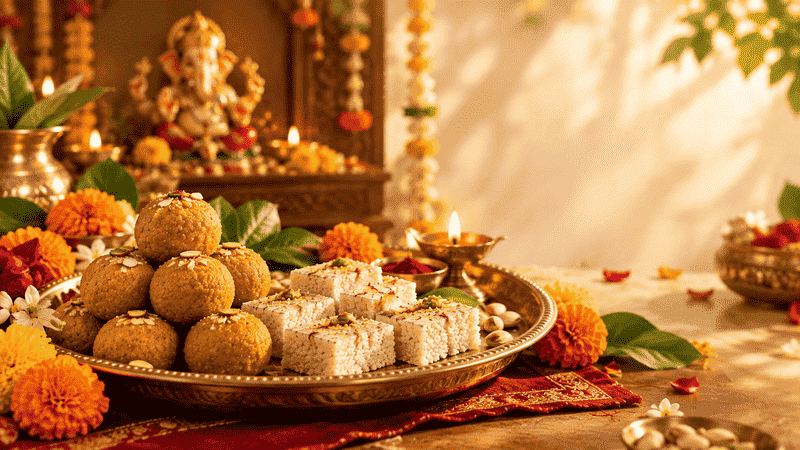
Both besan laddu and coconut burfi fit naturally into this celebration. Besan laddu, in particular, is traditionally prepared alongside modak specifically for Ganesh Chaturthi, since both are considered favourites of Lord Ganesha, while coconut, as one of the most auspicious offerings in Hindu tradition, makes coconut burfi an equally fitting choice for the puja thali. Ordering both together means one less thing to prepare from scratch during what is already a busy ten days of visarjan processions, evening aartis, and family visits.
Because festive demand tends to spike sharply in the days right before Ganesh Chaturthi, ordering early rather than waiting until the last weekend is generally the safer bet, particularly for anyone planning to gift sweets to extended family or send them to a different city altogether.
Discover the Double Delight Festive Collection
For anyone who wants more than just two sweets, DeliciousKart's Double Delight Festive Collection is built specifically around this stretch of the festive calendar, bringing together the playful spirit of Lord Krishna's Janmashtami and the devotional energy of Ganesh Chaturthi into one curated Festive Collection page
The collection currently features six thoughtfully assembled hampers ranging from the compact Flavours & Festivities Hamper to the more generous Gourmet & Gatherings Hamper, each combining traditional sweets, savoury snacks, and festive treats sourced from across India. Every hamper in the collection ships at a seasonal discount, and sizes range from roughly 500 grams up to just under 1.2 kilograms, which makes it easy to pick something proportional to the occasion, whether that's a small gesture for a neighbour or a larger gift for close family.
What makes this page particularly useful during the festive rush is that it removes the guesswork from gifting. Instead of separately hunting down laddus, namkeen, and other festive staples, the entire spread arrives assembled and ready to hand over, which matters a great deal when the festive to-do list is already long.
How to Serve, Store and Gift These Sweets This Festive Season
Getting the most out of a box of besan laddu or coconut burfi mostly comes down to a few simple habits. Both sweets keep best in an airtight container, stored at room temperature in a cool, dry spot away from direct sunlight or humidity, since both ghee-based and coconut-based sweets can turn oily or spoil faster in India's warmer, more humid regions.
For serving, both sweets work well straight out of the box, but a little presentation goes a long way during festive gatherings. Arranging laddus and burfis on a simple silver or brass thali, garnished with a few extra strands of saffron or chopped pistachios, instantly elevates a store-bought box into something that looks specially prepared. For gifting, keeping the two sweets separated with a small divider or parchment paper prevents moisture transfer between them and keeps both looking fresh when the box is opened.
If sweets are being sent to another city, it's worth accounting for a day or two of transit time and ordering slightly ahead of the actual festival date, particularly during the Ganesh Chaturthi week when courier volumes tend to rise sharply across most of India.
Key Takeaways
-
Besan Laddu and Coconut Burfi are two of India's most enduring festive sweets, and they complement each other well on the same plate.
-
Besan laddu is rich, nutty, and rolled, driven by roasted gram flour and ghee; coconut burfi is lighter, fudgier, and cut into squares, driven by fresh coconut.
-
Chaina Ram Sweets' versions of both, available on DeliciousKart, lean on traditional recipes rather than mass-production shortcuts.
-
Ganesh Chaturthi 2026 falls on September 14, with celebrations running through Anant Chaturdashi on September 25, making this an ideal window to order festive sweets.
-
The Double Delight Festive Collection bundles sweets, snacks, and festive treats into ready-to-gift hampers, saving time during a busy festive stretch.
-
Both sweets store best in an airtight container at room temperature and travel well when gifted or shipped.
Frequently Asked Questions
Q: What is the difference between besan laddu and coconut burfi?
A: Besan laddu is made from roasted gram flour, ghee, sugar, and cardamom rolled into round balls, giving it a dense, nutty flavour. Coconut burfi is made from grated coconut cooked with sugar or condensed milk and cut into squares, giving it a lighter, fudgier texture.
Q: Is besan laddu specifically associated with Ganesh Chaturthi?
A: Yes. While modak is the most iconic Ganesh Chaturthi sweet, besan laddu is very commonly prepared alongside it, since both are considered favourites of Lord Ganesha and are widely offered during the festival
Q: How long do besan laddu and coconut burfi stay fresh?
A: Both sweets typically stay fresh for one to two weeks when stored in an airtight container at room temperature, though this can vary depending on the ingredients used and the local climate.
Q: When is Ganesh Chaturthi in 2026, and how long does the festival last?
A: Ganesh Chaturthi 2026 falls on Monday, September 14, and the celebrations continue for ten days, concluding with Anant Chaturdashi on September 25.
Q: What comes in the Double Delight Festive Collection?
A: The collection includes six curated hampers combining traditional sweets, savoury snacks, and festive treats, ranging from smaller 500-gram hampers to larger assortments closer to 1.2 kilograms, all offered at a seasonal discount.
Q: Can these sweets be sent as gifts to family in another city?
A: Yes, both besan laddu and coconut burfi travel reasonably well when properly packed, though ordering a couple of days ahead of the festival is recommended to account for delivery time during peak festive demand.
Order authentic Besan Laddu, Coconut Burfi, or explore the Double Delight Festive Collection on DeliciousKart