

Some food memories are remarkably stubborn. The faint cardamom warmth of a fresh Gulab Jamun lingering after a family dinner. The satisfying crumble of Mysore Pak that someone brought back all the way from Bengaluru. The syrup-soaked softness of a Bengali Rasgulla that absolutely no other sweet comes close to replicating. If those memories feel distant now, or if you simply want to rediscover them without booking a flight across the country, you are already thinking about the best authentic Indian sweets to order online.
We have all, at some point, settled for a pale imitation of something we know to be extraordinary. The mithai from a local shop that does not quite carry the depth of that halwai in Old Delhi. The barfi that looks right but tastes of shortcuts. This guide exists so that does not have to keep happening. We cover what to look for in an authentic seller, which regional specialities are genuinely worth seeking out, and how to make certain that what arrives at your door actually tastes like home, or like the food memory that started this search in the first place.
What to Look for in Authentic Indian Sweets Online
Not every mithai that ships nationally is truly authentic. The word 'authentic' carries real weight here, it refers to sweets made with traditional recipes, region-specific ingredients, and preparation methods that have not been simplified or industrialised for mass production. The challenge, naturally, is that a product page cannot replicate the experience of standing inside a reputed sweet shop and watching the halwai at work.
We have found that a handful of concrete markers reliably separate the genuinely authentic from the convincing imitation. Here is what we look for:
Ingredient sourcing: Whole cashews, not cashew powder mixed with fillers, define real Kaju Katli. Authentic Bengali Rasgulla depends on fresh chenna, cottage cheese kneaded by hand, not reconstituted milk solids. Ingredient sourcing tells you more about a product than any marketing claim.
No artificial preservatives: Authentic mithai typically has a shorter shelf life precisely because it contains no artificial stabilisers. A sweet that ships comfortably for thirty days without refrigeration deserves a closer look at its ingredients label.
Regional provenance: Mysore Pak belongs to Karnataka, Petha to Agra, Sandesh to Kolkata. These are not interchangeable. The region of origin matters as much as the recipe, sometimes more, because regional climate and ingredient availability shaped the recipe over generations.
Transparency about preparation: Look for brands that specify whether sweets are handmade or factory-produced, and whether traditional methods, such as slow-cooking in pure desi ghee, are followed. This level of transparency is a reliable signal of genuine craft.
Allergen information: Nuts, dairy, and gluten are common in Indian sweets. Trustworthy sellers list allergens clearly and specifically, not through vague claims of being 'all-natural' or 'traditionally made.'
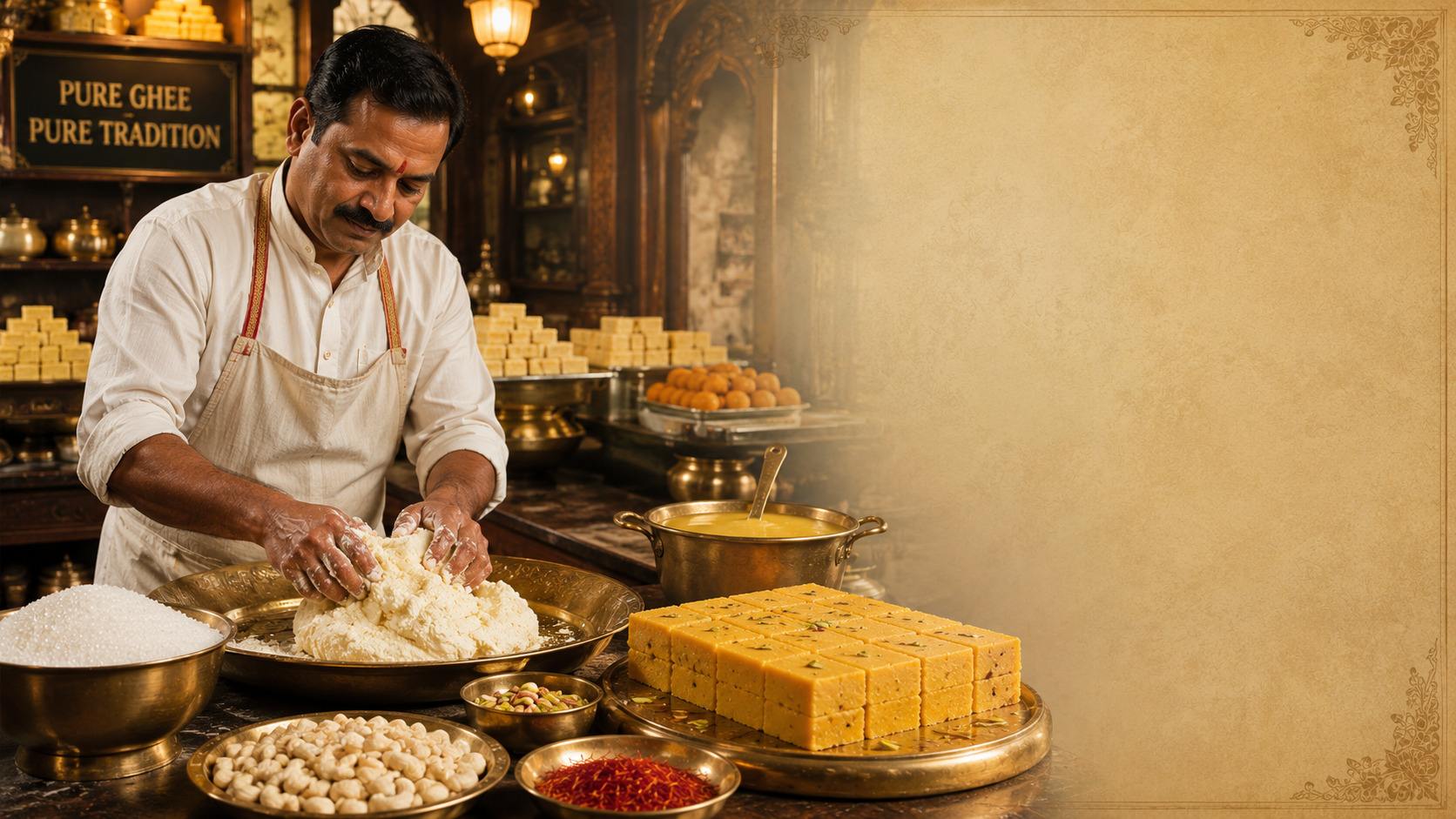
Gulab Jamun is widely considered one of the most universally loved desserts in India, celebrated for its soft texture, rich flavour, and syrupy sweetness at festivals, weddings, and ordinary family gatherings alike. The reason it remains beloved across generations is that the preparation itself, slow-fried milk solids bathed in rosewater-scented syrup, has not fundamentally changed. When we order it online, the essential question is whether the seller has respected that continuity. The answer, more often than we would like, is no.
Top Authentic Indian Sweets Worth Ordering
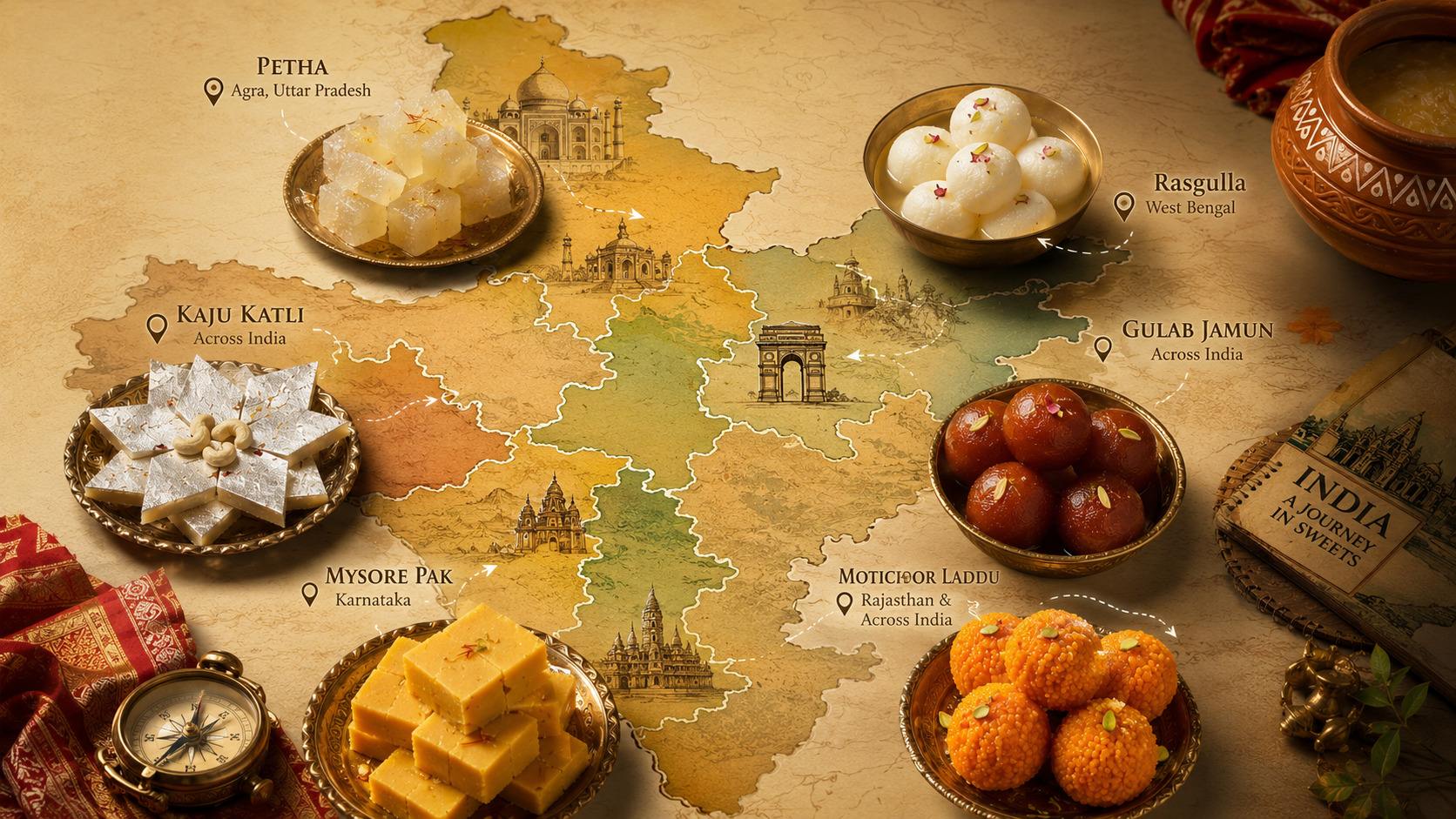
India's mithai map is genuinely enormous. Every state, and often every district within a state, holds a sweet that it considers its own. We have focused here on the regional classics most worth seeking out, the sweets that have earned their reputations over decades and that reward proper sourcing.
Bengali Rasgulla
Soft, spongy, and soaked in the gentlest sugar syrup, the Rasgulla is one of Bengal's most iconic contributions to Indian cuisine and one of the most exacting to produce properly. Proper Rasgullas are made from chenna kneaded until completely smooth, shaped carefully by hand, and cooked in syrup at precisely the right temperature. When they arrive at your door, they should be pillowy to the touch and spring back gently when pressed.
What distinguishes an authentic Rasgulla from a mass-produced facsimile is restraint. It should not be oversweetened. It should not be rubbery or dense. The syrup should be light, not cloying. These qualities come from the process, not ingredients alone, and that process requires patience that factory production rarely permits. When you find a seller who honours this, hold onto them.
One practical note: fresh Rasgullas are among the more perishable sweets in the Indian canon, typically best enjoyed within four to five days at room temperature and up to ten days when refrigerated. Order from a seller who ships quickly and states the preparation date clearly. Vagueness about freshness is a warning sign.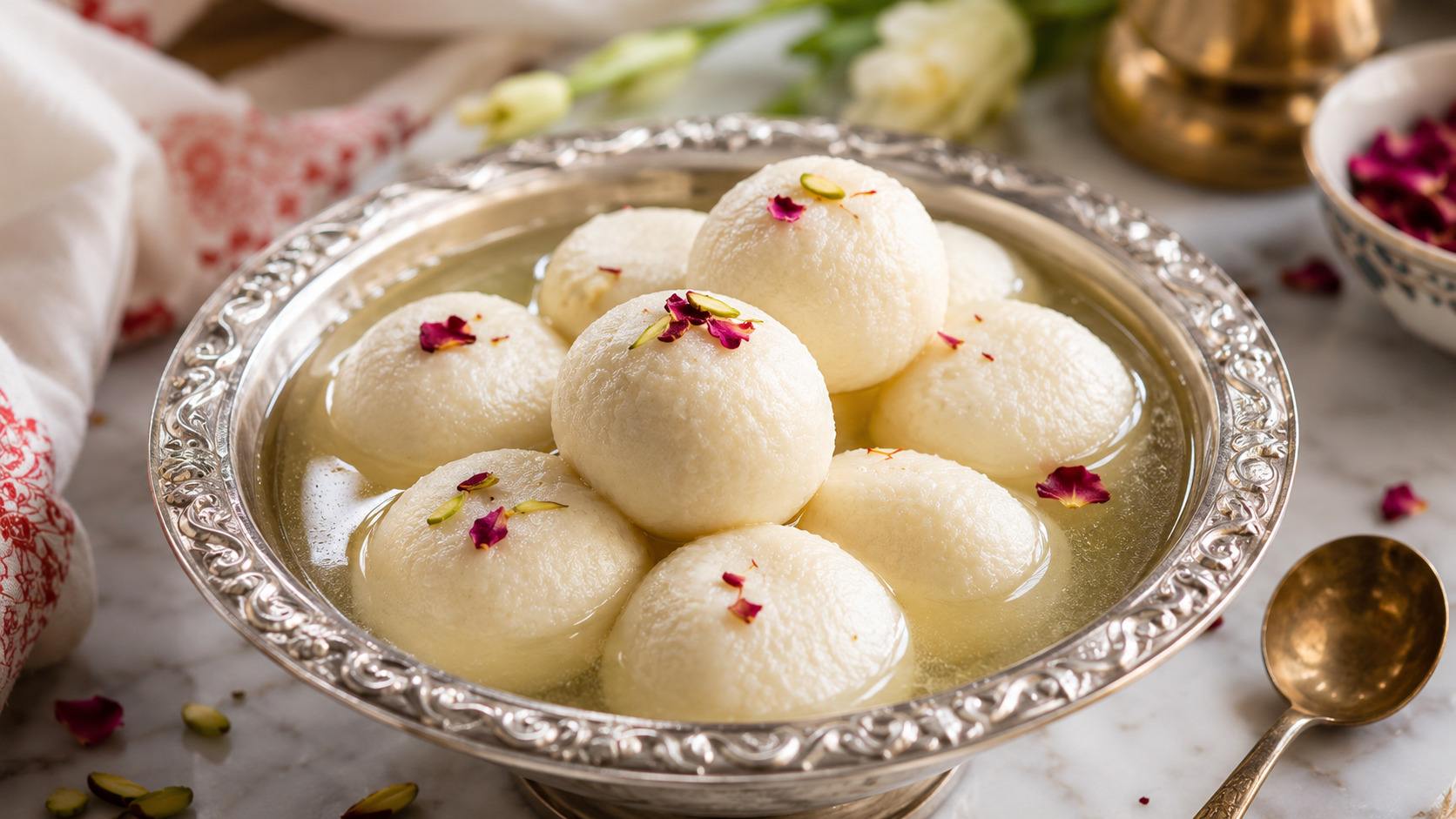
Kaju Katli
The silver-foiled rhombus that appears at every Diwali, every wedding, and every celebration worth attending. Made from cashew paste and sugar, Kaju Katli is deceptively simple and correspondingly difficult to get right. The texture should be smooth and firm, never grainy or overly chewy. It should melt gradually in the mouth rather than crumbling apart immediately.
The ratio of cashew to sugar is everything. Too much sugar and the flavour flattens into mere sweetness; too little and the texture suffers. Pure desi ghee, when used as it traditionally should be, adds a subtle depth that sets a genuinely crafted Kaju Katli apart from the rest. We look specifically for sellers who list pure cashew content and avoid entirely those who mention 'cashew flavour' anywhere in their ingredients, a phrase that tells you almost everything you need to know about what you would be receiving.
Mysore Pak
Karnataka's most celebrated sweet is also one of the most uncompromisingly rich: dense, melt-in-the-mouth blocks made from generous quantities of pure ghee, besan (gram flour), and sugar. There are two recognised styles, the harder, porous version that crumbles satisfyingly with each bite, and the softer, fudgier variety that gives way more gradually. Both are deeply rewarding. Neither emerges from a low-effort process.
The authenticity marker we trust most for Mysore Pak is simple: the scent of hot ghee. If the packaging still carries that warm, nutty fragrance on opening, the preparation was honest. If it smells of nothing in particular, the ghee may have been compromised by substitutions. It is a small thing, but it tells you a great deal about whether the traditional method was followed or merely approximated.
Petha (Agra)
Arguably India's most underestimated sweet. Made from ash gourd, Petha is translucent, lightly sweet, and available in a remarkable range of flavours, plain, kesar, paan, angoori, and many more. Agra's version has a soft, almost glassy texture that is unlike anything else in the mithai world, and the city has been producing it for centuries with a level of specialisation that shows.
One practical advantage of Petha that makes it particularly well-suited for online ordering: it keeps considerably better than most milk-based sweets, typically for two to three weeks without refrigeration. For those ordering across greater distances or planning ahead for a celebration, Petha offers both quality and sensible logistics.
Gulab Jamun
The undisputed crowd favourite, and one that deserves every bit of its reputation when made properly. The best Gulab Jamuns are made from khoya, reduced milk, fried slowly to achieve an even golden-brown colour throughout, then immersed in syrup flavoured with rosewater and cardamom. The result should be tender to the core, soaked through rather than merely coated.
Common shortcuts include using milk powder instead of khoya, under-frying to save time, or using a thin syrup that does not penetrate the sweet properly. These are easy shortcuts to spot: the sweet will be dense in the centre, lack depth of flavour, or feel drier than it should. When ordering online, seek out sellers who specify khoya as an ingredient and describe their preparation in terms that suggest actual cooking rather than assembly.
Besan Laddu and Motichoor Laddu
These two represent the breadth of India's laddu tradition. Besan Laddu, made from roasted gram flour, ghee, and sugar, carries a deep, nutty warmth and a slightly coarse texture that makes each bite genuinely satisfying. Motichoor Laddu, made from tiny fried droplets of batter bound together with syrup, is more delicate and aromatic.
Both travel reasonably well and have a better shelf life than fresh chenna-based sweets, making them reliable choices for online orders. The quality test for Besan Laddu is straightforward: does it smell of properly roasted gram flour and ghee, or does it smell of nothing? Good roasting cannot be faked by a sweetener.
How to Choose the Right Sweets for Your Needs
Different occasions and preferences call for different types of Indian sweets. If you are selecting mithai for gifting, options like Kaju Katli and assorted sweet boxes are excellent choices because they travel well, have broad appeal, and are recognized across India. For festivals such as Diwali, Holi, or family celebrations, traditional favorites like Gulab Jamun, Motichoor Laddu, and Mysore Pak create a festive experience and are widely enjoyed by guests of all ages. If you are ordering for personal enjoyment, fresher sweets such as Rasgulla, Sandesh, and Gulab Jamun offer the most authentic taste experience and showcase the craftsmanship of skilled sweet makers. When longer shelf life is important, sweets like Petha, Chikki, and dry-fruit-based mithai are practical options that maintain their quality during transit and storage. For those who enjoy rich nutty flavors, Kaju Katli and Badam Barfi provide a premium experience by highlighting the natural taste and texture of high-quality nuts. By matching your sweet selection to the occasion, freshness requirements, and personal preferences, you can ensure a more satisfying and memorable mithai experience.
Beyond the occasion, a few practical questions are worth asking before every order:
What is the preparation date? Freshness matters most for milk-based sweets. A seller who does not mention the preparation date is a seller who may not be prioritising freshness.
Does the seller provide allergen information? Dairy, nuts, and gluten appear in the majority of Indian sweets. If you are ordering for someone with dietary restrictions, precise information is non-negotiable.
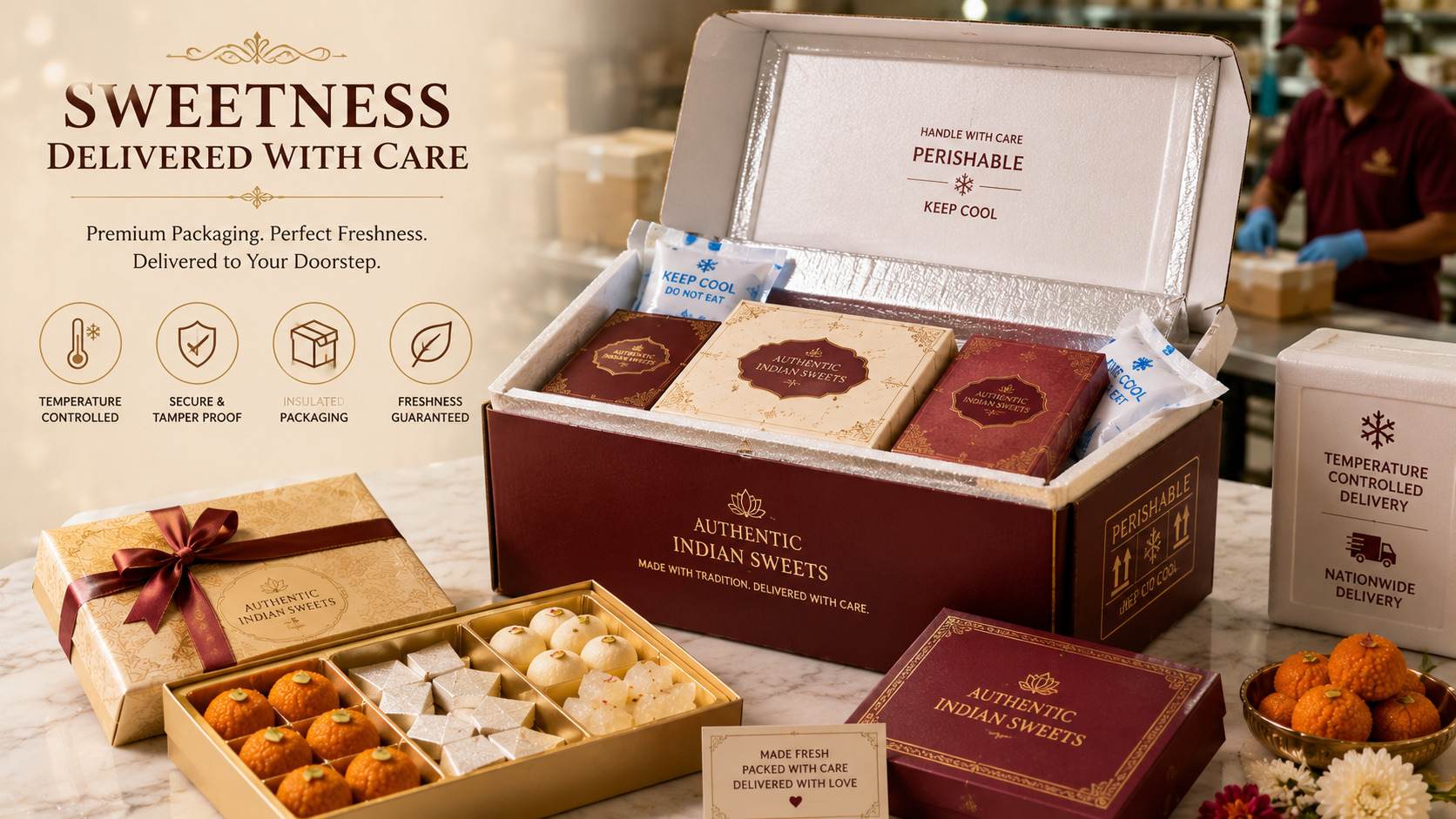
What is the packaging? Temperature-controlled packaging, properly sealed containers, and minimal transit time are not optional for perishable mithai. They are the baseline.
Is the brand transparent about sourcing? Sellers who describe their preparation process and ingredient origins are reliably more trustworthy than those who do not. Vagueness is seldom a good sign.
Shipping Perishable Indian Sweets: What We Have Learned
This is where many online sweet orders go wrong, and where the gap between a well-regarded seller and an ordinary one becomes most apparent. Freshness during transit is the defining challenge, particularly for milk-based sweets such as Rasgulla, Peda, Kalakand, and Sandesh, precisely the sweets that reward quality sourcing the most.
The shelf life of a traditional milk sweet is simultaneously its most significant logistical limitation and its clearest proof of authenticity. If a milk-based sweet survives for months without refrigeration, something has almost certainly been added to it. Authentic mithai does not last indefinitely, and a seller who knows this will tell you so directly.
Here is what genuinely responsible sellers do differently from the rest:
Temperature-appropriate packaging: Insulated or cold packaging for dairy-based sweets, particularly during warmer months. This is a non-trivial cost that separates sellers who take quality seriously from those who do not.
Clear preparation and dispatch dates: Transparency about when the sweet was prepared and when it was dispatched is the only real way for a buyer to assess how much of the sweet's ideal freshness window remains on receipt.
Realistic delivery timelines: A two-day dispatch window means very little if the transit itself takes five days. Sellers who do not account for total delivery time in their freshness claims are being misleading, whether intentionally or not.
Cold packs for the most perishable sweets: Some sellers include small refrigerant packs for the most perishable items. This detail, small as it sounds, indicates that the seller has actually thought through the logistics of what they are selling.
For those ordering across longer distances, the most practical approach is to choose sweets with better natural shelf stability: Kaju Katli, Petha, Chikki, dry-fruit laddus, or nut-based confections. These hold their quality through longer transit far more reliably than fresh syrup-soaked sweets, and they remain genuinely excellent in their own right.
A Brief Regional Guide: Where India's Best Sweets Come From
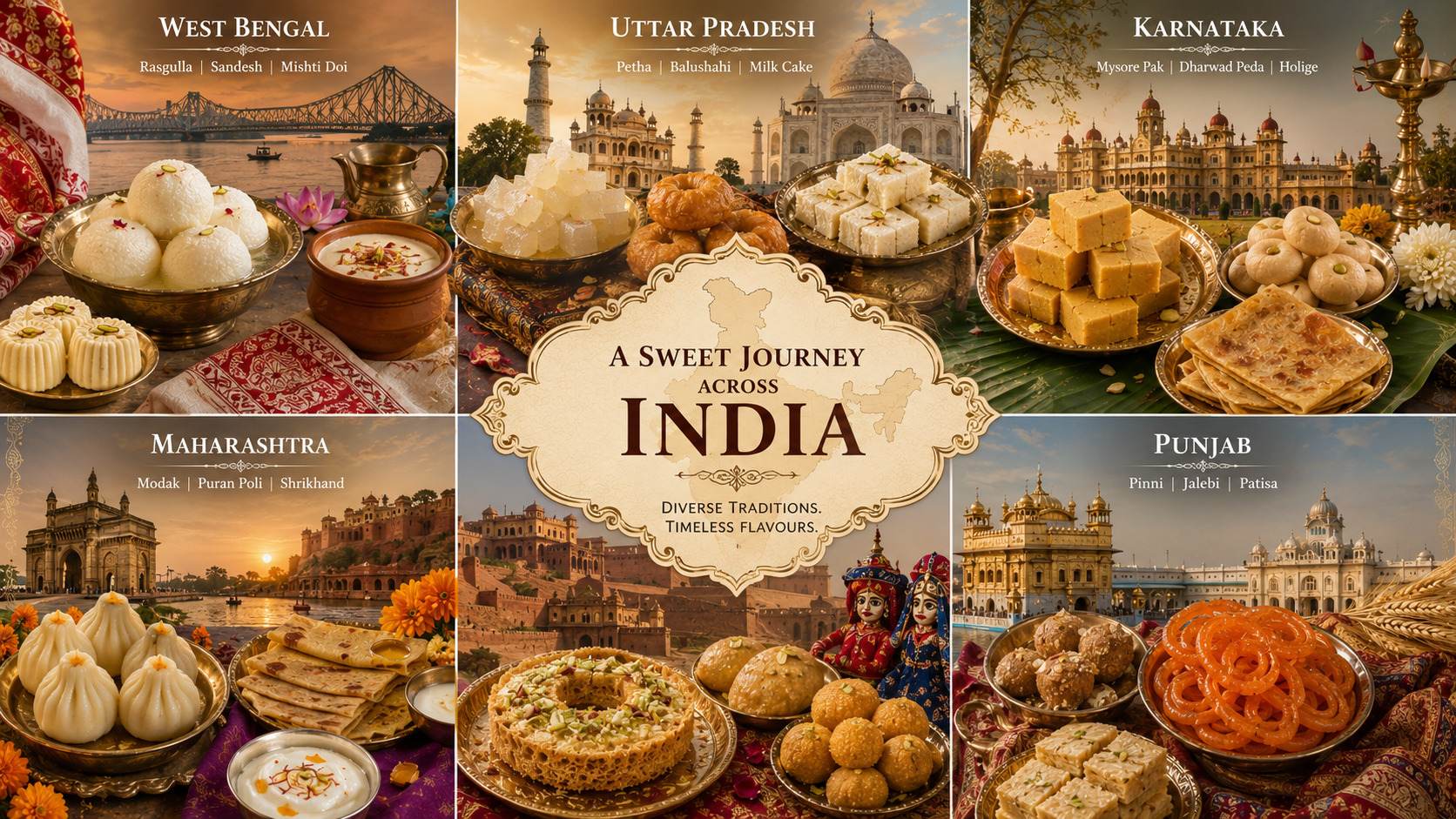
Understanding the regional origins of Indian sweets helps enormously when assessing what a seller is claiming to offer. Authentic regional sweets carry specific preparation traditions that are not simply transferable to any kitchen.
West Bengal: Bengal: Rasgulla, Sandesh, Mishti Doi, Chomchom. Bengal's sweet tradition is the most sophisticated in India for chenna-based confections. The texture and restraint of Bengali sweets is their defining quality.
Uttar Pradesh: Uttar Pradesh: Petha (Agra), Gujiya, Rewri. UP's sweets tend toward celebration, Petha is the only sweet in the world made from ash gourd in this manner, and Gujiya remains inseparable from the Holi tradition.
Karnataka: Karnataka: Mysore Pak, Dharwad Pedha, Obbattu. Mysore Pak's richness reflects Karnataka's generosity with ghee, and Dharwad Pedha has its own Geographical Indication status, a formal acknowledgement of its regional distinctiveness.
Maharashtra: Maharashtra: Puran Poli, Modak, Chirote. Maharashtra's sweet tradition is deeply tied to ritual, Modak is inseparable from Ganesh Chaturthi and comes in steamed and fried varieties, each with its own devoted following.
Rajasthan: Rajasthan: Ghevar, Malpua, Mawa Kachori. Rajasthani sweets are built for heat and longevity, and Ghevar, a disc-shaped sweet made from flour and ghee, soaked in syrup, requires a technique that most sweet-makers simply do not attempt.
Punjab: Punjab: Pinni, Sohan Halwa, Gajrela. Punjab's sweets are generously portioned and warming, designed to sustain. Pinni, made from desi ghee, whole wheat flour, and dry fruits, is particularly well-suited to winter.
Ordering Indian Sweets as Gifts: Making It Count
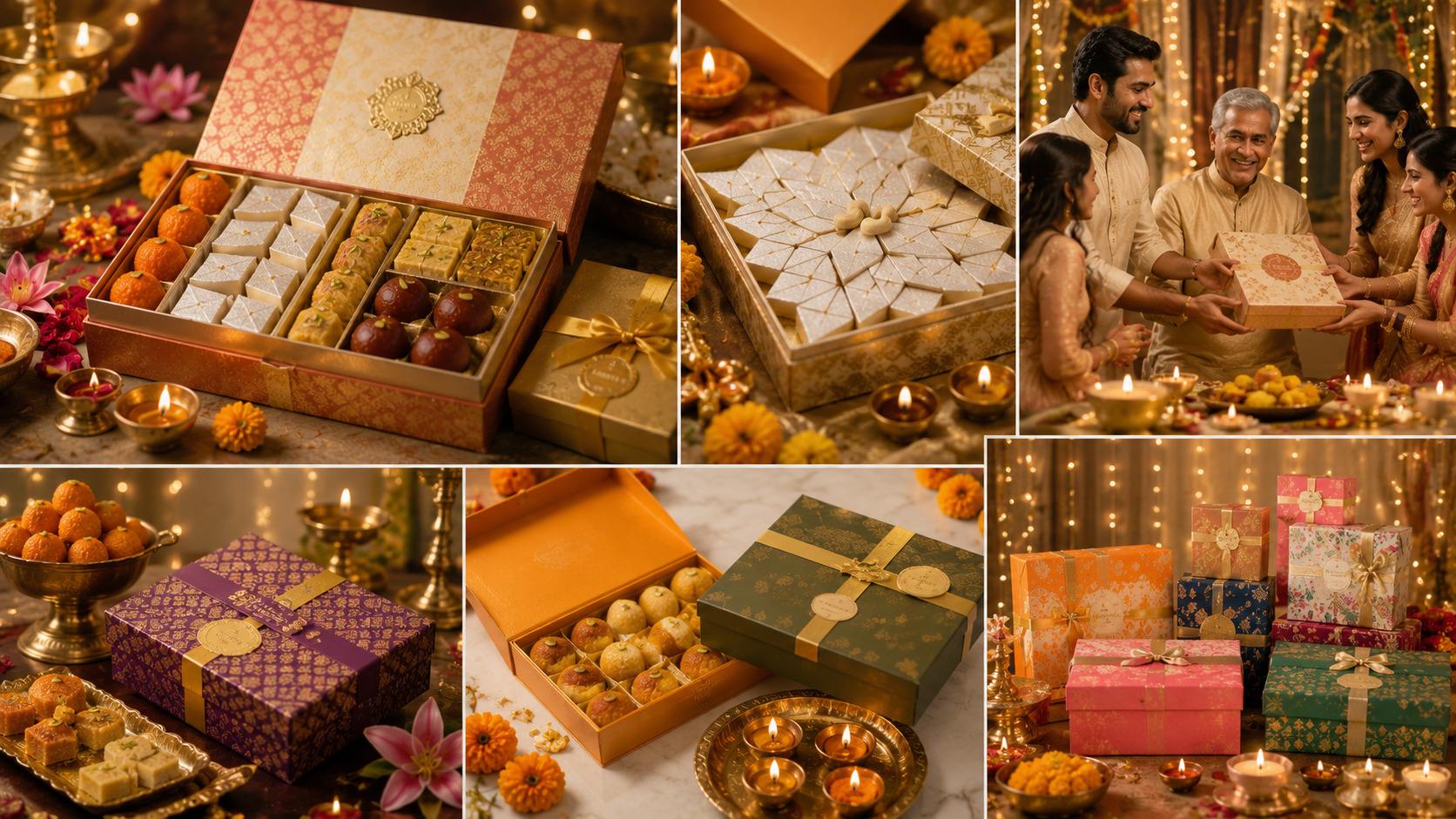
Gifting Indian sweets online requires a slightly different approach from ordering for personal consumption. The sweet must survive transit well, arrive looking as good as it tastes, and suit a recipient whose precise preferences you may not know in complete detail.
Our experience suggests that the following considerations matter most when ordering mithai as a gift:
Prioritise stability for longer journeys: Choose sweets that travel well first, then optimise for quality within that constraint. Kaju Katli and dry-fruit barfis are almost always safe choices. Rasgulla and Kalakand require faster shipping and more careful packaging.
Assorted boxes for unknown preferences: A well-curated assorted box allows the recipient to discover new favourites while ensuring at least some sweets that are already known and loved are included.
Invest in proper gift packaging: Packaging communicates your seriousness. A gift that arrives in a well-designed, well-sealed box sends a different message from something that arrives in basic plastic. Most reputed sellers offer gift-specific packaging at modest additional cost.
Plan for timing: Do not order a sweet to arrive on the day of the occasion, buffer for transit delays. A sweet that arrives a day late for a birthday has missed its moment entirely.
Consider dietary preferences: If you know the recipient observes a particular fast or dietary restriction, check the ingredient list carefully. Many traditional sweets contain dairy, nuts, or both.
Conclusion
The best authentic Indian sweets to order online come from sellers who genuinely respect the original recipe, source their ingredients with care, and treat freshness as a non-negotiable standard rather than a marketing claim. India's mithai tradition is among the most diverse and sophisticated in the world, and it deserves to be encountered in its best form, not in a compromised version designed primarily for shelf life.
Whether we are rediscovering a childhood favourite, gifting someone a taste of their hometown, or simply exploring something extraordinary and new, the experience of receiving a well-made Indian sweet is consistently worth the care it takes to find a good source. The memories it carries forward are worth even more.
Take the time to read the preparation details. Ask about ingredients. Notice whether the seller talks about what makes their sweets special in terms that reflect genuine knowledge. Those small investments in attention return themselves many times over, in the form of a Rasgulla that actually tastes like the ones you remember, or a Mysore Pak that carries the proper fragrance of ghee before you have even tasted it.
That is what authentic Indian mithai does, when it is made right and sourced honestly. It brings a memory home.
Key Takeaways
-
Authentic Indian sweets are defined by traditional recipes, region-specific ingredients, and preparation methods that avoid industrial shortcuts.
-
Always check ingredient quality, preparation methods, regional origin, and preservative usage before ordering sweets online.
-
Freshness is one of the strongest indicators of authenticity, especially for milk-based sweets like Rasgulla, Sandesh, and Gulab Jamun.
-
Regional specialties such as Bengali Rasgulla, Karnataka's Mysore Pak, Agra's Petha, and Kaju Katli offer unique flavors rooted in local traditions.
-
Different occasions require different sweet selections, with gifting, festivals, and personal indulgence each benefiting from specific choices.
-
Proper packaging, shipping timelines, and clear preparation dates are essential for maintaining quality during transit.
-
Nut-based and dry sweets generally travel better and have longer shelf lives than fresh dairy-based mithai.
-
Authentic sellers are transparent about sourcing, ingredients, allergens, and preparation methods.
-
Understanding the regional origins of sweets helps buyers identify genuine products and avoid mass-produced imitations.
-
Choosing the right sweet involves balancing taste preferences, shelf life requirements, gifting needs, and delivery logistics.
Frequently Asked Questions
Q: Which Indian sweets travel best when ordered online?
A: Sweets with low moisture content travel most reliably: Kaju Katli, Petha, Chikki, dry-fruit laddus, and nut-based barfis. Milk-based sweets such as Rasgulla, Sandesh, and Kalakand are more perishable and require faster shipping with properly insulated packaging.
Q: How do we know if an Indian sweet ordered online is truly authentic?
A: Look for sellers who list preparation methods, ingredient sourcing, and allergen details clearly. Authentic mithai rarely contains preservatives, tends to have a shorter shelf life, and specifies traditional preparation, such as pure desi ghee or hand-kneaded chenna. Vague claims of being 'all-natural' or 'traditionally made' without specifics are worth treating with scepticism.
Q: What is the most popular Indian sweet to order as a gift?
A: Kaju Katli is consistently among the most gifted Indian sweets, elegant, nut-forward, and recognised across every region of India. Assorted mithai boxes are also a reliable choice when the recipient's specific preferences are unknown or diverse.
Q: What should we check before ordering Indian sweets online?
A: The preparation date, allergen information, shipping timeline, and packaging type are the four most important details. A seller who provides this information openly and specifically is far more likely to deliver something genuinely excellent than one who remains vague about any of these.
Q: Are nut-based sweets a good option for online ordering?
A: Yes, and for good reason. Nut-based sweets such as Kaju Katli, Badam Barfi, and pistachio-filled confections have considerably better shelf stability than milk-based varieties, making them well-suited for delivery across India, including to cities farther from major production centres.
The mithai you have been thinking about is one order away. Shop Authentic Indian Sweets on DeliciousKart made the traditional way, delivered fresh to your door."