

Dussehra Hampers & Navratri Festive Gifts 2026: A Traditional Sweet Guide
Nine nights of fasting, Garba, aartis that run till 1 a.m. By the end of it, people are tired. Really tired. And that's exactly when a gift box turns up at the door, a few dry fruits, some barfi, maybe a diya tucked in the corner. Nobody is counting the rupees inside. What people notice is that someone thought of them in the one week they're living on sabudana and barely sleeping.
The gifting window this year is pretty short, and the list of people is long. Fasting relatives, the family hosting Kanya Pujan, office colleagues, and that one uncle who expects his Dussehra mithai every year without fail. Chocolates and gourmet boxes are fighting for space with Dussehra celebration hampers, and Diwali orders have already begun. Meanwhile, something interesting is going on. Older things are getting popular again, like GI-tagged pedas, Mysore Pak from the palace kitchens, small-town sweets with a proper backstory. That's heritage sweet gifting, and it's growing quietly. Below, I've covered the dates, the fasting rules, regional habits, what the market looks like and a few safety checks. All of it affects whether your gift gets appreciated or just gets put away in a cupboard.
The 2026 Festival Calendar
Dates first, because the rest of the planning depends on them.
Vedic Temple and Time and Date both say Sharad Navratri 2026 begins with Ghatasthapana on Sunday, October 11. It ends with Vijayadashami (Dussehra) on Tuesday, October 20. We're at October 8 right now, so Day 1 is three days away. Not much time.
Now, a couple of things confuse people. You'll see the festival written as October 11 to 19 on some calendars and October 11 to 20 on others. Neither is wrong. The first counts only the nine nights, the second adds Dussehra. A few old guides still say October 10, which is out of date. Then there's Ashtami. Panchang Bodh puts Maha Ashtami, Sandhi Puja and Maha Navami together on the 19th, with Dussehra on the 20th, but some regional calendars still keep Durga Ashtami on the 18th. If Kanya Pujan is on your list, ask the family which day they follow before you order anything.
Bengal runs on a different clock. Durga Puja is listed for October 16 to 21, so a gift for a Bengali friend should land before the 16th. Not on Dussehra morning, by which time they've already been pandal-hopping for days.
People also celebrate in disparate ways. Gujarat has Garba and Dandiya, Bengal has pandals, North India has Ramlila and Ravan Dahan. A sweet box that feels just right in Ahmedabad can feel slightly odd in Kolkata. So think about how that person celebrates, and don't only look at the date.
Diwali is on Sunday, November 8, not far behind. I'd keep the two separate. Navratri and Dussehra gifts are usually personal, religious and food-based. Diwali tends to be bigger and more corporate. If you mix them up you end up buying the same box of sweets for everybody.
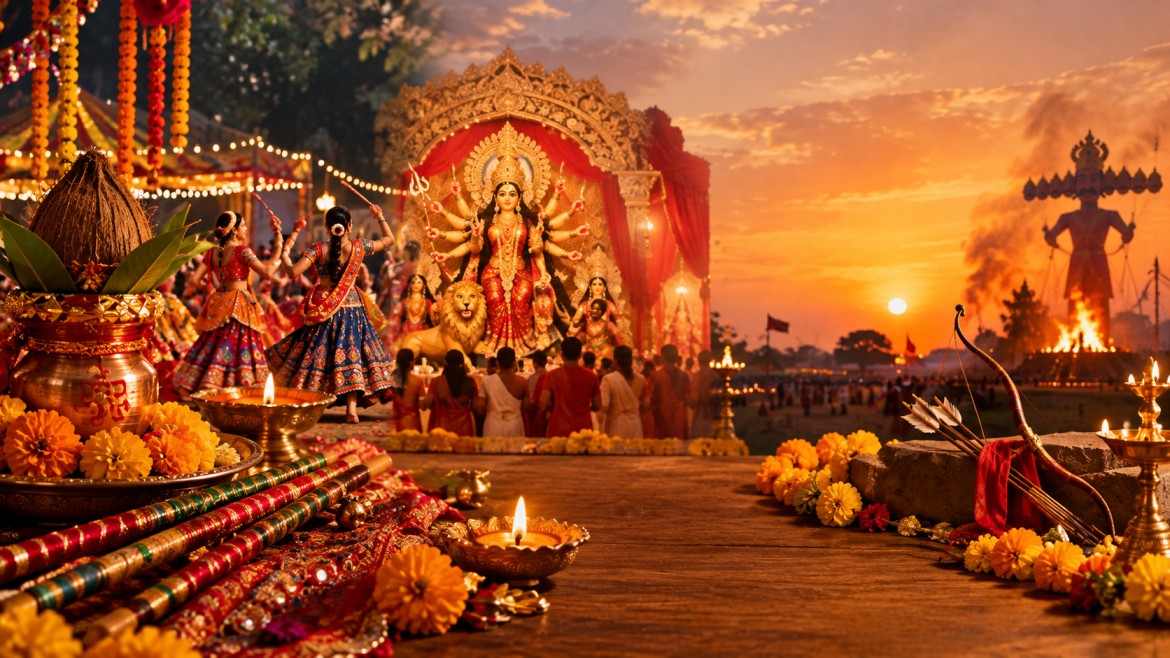
Navratri Festive Gifting: Nine Nights, Nine Moods
Navratri festive gifting is harder than Diwali gifting, and the reason is simple. Many of the people you're buying for are fasting. If you leave a regular mithai box with someone on a nine-day vrat, they might be thrilled. Or it might be awkward. It all depends on what's in the box.
Gifting around the vrat
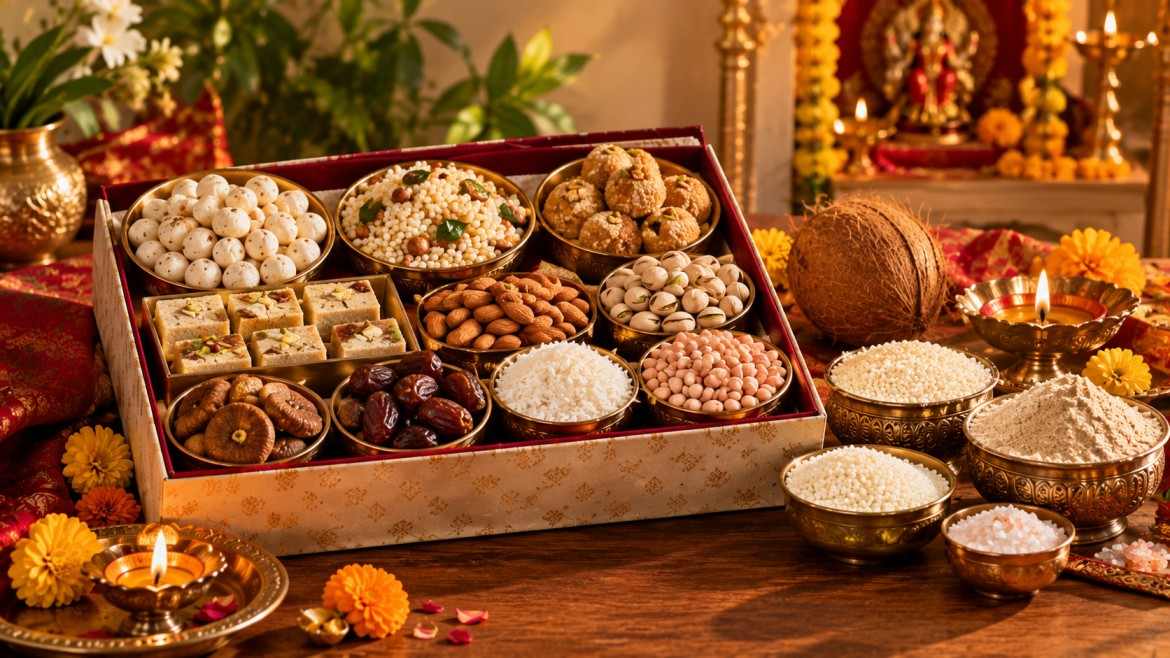
The basic rules are familiar, though every home adjusts them a bit. What's usually allowed: kuttu and singhara flour, sabudana, samak rice, potatoes, paneer, curd, makhana, peanuts, dry fruits, ghee and sendha namak. What's usually skipped: onion, garlic, lentils, and ordinary salt (Veg Recipes of India has a clear guide on this). So a normal namkeen mix, with onion powder and table salt, is a bad idea for these nine days. Doesn't matter how pretty the packaging is.
It also changes from home to home. One vrat recipe guide says Jain families avoid root vegetables, even potato, sweet potato and raw banana, though plenty of fasting recipes use them. When the group is mixed and you can't ask everyone, stick with nuts, makhana, dairy sweets and ghee-roasted snacks. And label everything clearly.
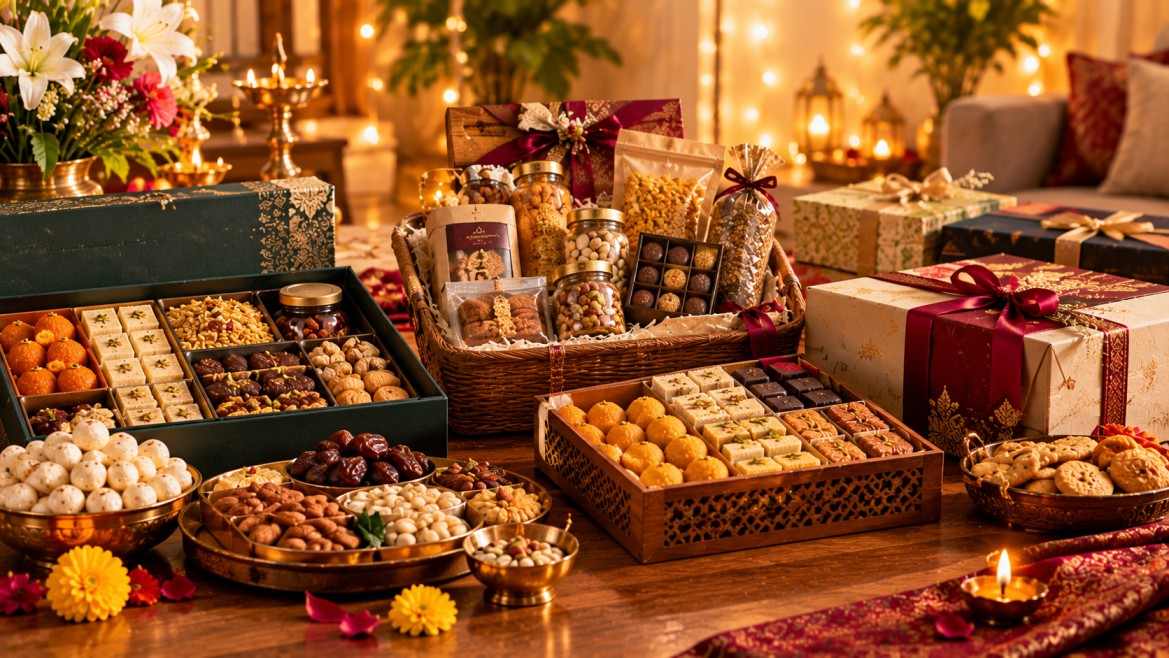
Here's what a decent vrat hamper looks like. Ghee-roasted makhana with sendha namak and black pepper. A sabudana chivda made without onion or garlic. Falahari laddus or barfis, made from dry fruits, coconut or jaggery. Then almonds, pistachios, figs and dates to make the box feel a bit premium. Some people add a small pack of kuttu or singhara flour for the recipient to cook with. And a small jar of sendha namak, which sounds boring but often turns out to be the most used item in the whole box.
Kanya Pujan and the Ashtami and Navami gift
On the eighth or ninth day, lots of homes invite young girls over, treating them as forms of the Goddess. Nine girls represent the nine forms of Durga. Their feet are washed, and they get new clothes and small gifts. It's the same even in public events. In 2023 the Uttar Pradesh chief minister did Kanya Pujan at the Gorakhnath Temple, washed the feet of nine girls, and then gave them a chunri, dakshina and gifts.
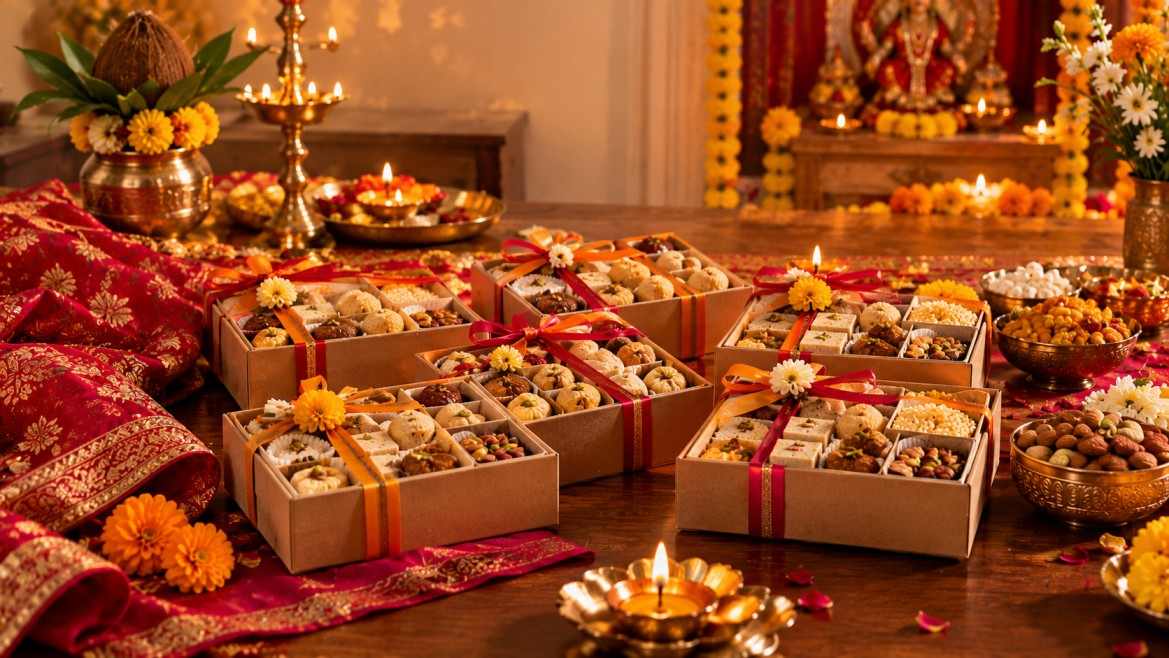
At home, families often put together a small sweets-and-snacks box for each girl. Go for soft food because whole hard nuts aren't great for little kids. Keep all the boxes identical so nobody feels left out. And order nine or eleven mini boxes a few days ahead since that morning is already chaotic.
What about the nine colours?
Social media loves the colour chart for each day. For wrapping it's a fun idea, say a ribbon or card in the day's colour. The trouble is that the colours change by region and by panchang. Two guides published this season don't even match on Day 1. My suggestion: follow the recipient's own tradition, or leave the colours out.
Dussehra Celebration Hampers: The Tenth-Day Box
Navratri gifting is careful. Dussehra gifting is the opposite, it's when everybody finally exhales. The fast is over, Ravana is burnt, and the sweets come out. Dussehra celebration hampers can be a lot more indulgent than the vrat ones.
The fafda-jalebi tradition
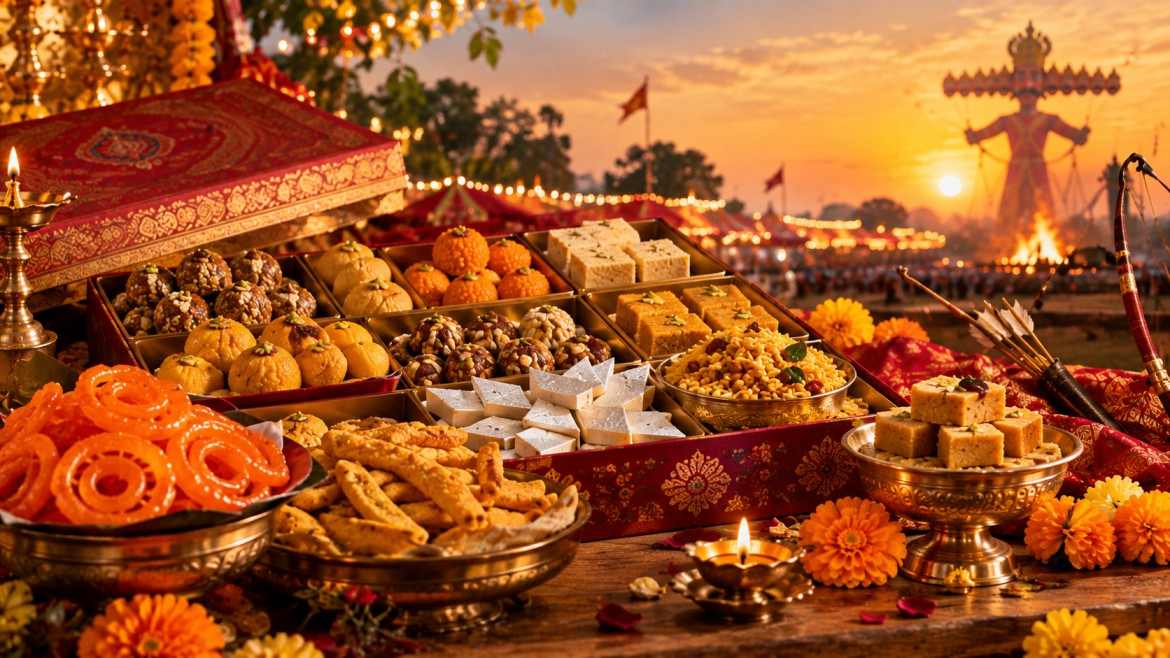
You can't talk about Dussehra food without mentioning Gujarat, where fafda and jalebi on Dussehra morning is almost a law. There's a excellent story behind it. Rama supposedly loved jalebi, and Hanuman supposedly liked gram-flour dishes, so people eat both. There's a practical side as well. After nine days of fasting, something like fafda is a gentle way to get back to regular food.
Moreover, it's huge. Foodies Only says there are over 10,000 shops and stalls selling fafda-jalebi in Gujarat on that one day. Older regional reports mentioned people lining up the night before. If you want to gift a fafda-jalebi box there, book early or go and pick it up yourself.
Outside Gujarat
Other regions do different things. Gujarat also does Ayudha Puja in workshops, and in most of North India the evening is about Ramlila and burning Ravana's effigy. In some communities people exchange Shami leaves, which goes back to the Pandavas' exile in the Mahabharata. A hamper with a few shami leaves (if you can find them), a diya and a handwritten Vijayadashami note will probably feel warmer than another tin of assorted sweets.
What travels well, what doesn't
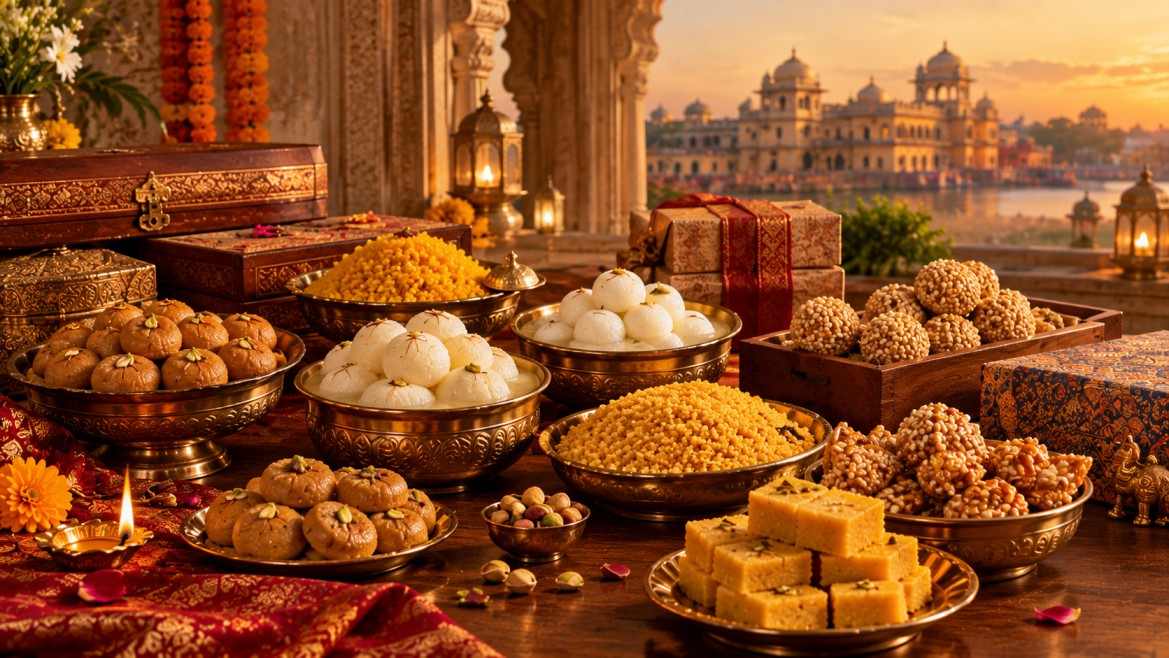
Fresh jalebi is a same-morning thing. It rarely survives a courier. If the hamper has to travel, pick sturdier sweets: besan, motichoor and dry-fruit laddus, soan papdi, Mysore Pak, kaju katli. For people who want less sugar, roasted dry fruits and makhana are fine. Add one salty item like mathri or namkeen so the box doesn't get too sweet. Use compartment trays so dense sweets don't knock into each other, and put a clear ingredient and best-before label on it. Oh, and a short handwritten card. It matters more than people expect.
Heritage Sweet Gifting: Why Old Recipes Are Winning
The best thing about heritage sweet gifting is that every sweet has a story. A box labelled "assorted mithai" is only a box. But if the label says where the peda comes from, who first made it and why the milk is special, now you've given the person something to talk about over tea.
GI tags as proof
If you care about authenticity, India's Geographical Indication registry is a handy shortcut. A GI tag links a product to a place and a method. Quite a few sweets have one.
Dharwad Peda from Karnataka got its tag in 2007. It has a caramelised taste and a slightly grainy texture, and Karnataka's tourism board says it's been around for more than 175 years. The rosogolla story is more dramatic. Bengal and Odisha fought for years over who invented it, and NPR covered the 2017 GI ruling that went to Bengal. Odisha then got its own tag, for Odisha Rasagola, in 2019. So both have a valid claim now. A hamper with one from each is a fun conversation starter. Other GI-tagged sweets include Bardhaman Mihidana, Joynagar Moa and Kovilpatti Kadalai Mittai.
One warning. Not every famous regional sweet has a GI tag, and some sellers throw around the word "heritage" very freely. If the seller can't tell you where a sweet is from, be careful.
Royal kitchens, modern twists
Some sweets belong more to palaces than to any registry. Mysore Pak came out of the Mysore Palace kitchens, and the recipe is only gram flour, ghee and sugar. Old recipes are also being remixed. Adgully reports that MTR has launched Coffee and Chilli versions of Mysore Pak, and added kesar badam and kala jamun to its gulab jamun range. A good heritage hamper can hold both, a classic for traditionalists and one odd twist for people who like to experiment.
Where regional curation helps
Online stores built around regional sourcing make all this easier. Delicious Kart, for instance, calls itself a curated home for India's most-loved regional sweets, snacks and savouries, carefully sourced, freshly packed and delivered to your door. Its collections suit heritage gifting: Traditional Sweets & Mithai, Regal Sweets & Treats and Regional Favourites. Shopping by city or state is better than guessing if an "authentic" box really comes from the place on the label.
How the Gifting Market Is Changing
Traditions are strong, but the market around them keeps moving. BW Businessworld quotes brand leaders who say gifting is shifting from duty to something more personal, premium and experience-based, while mithai stays a festive staple.
It's more like growth than replacement. Business of Food says the category now includes traditional sweets, dry fruits, chocolates, savouries, baked goods, gourmet foods and curated hampers. Haldiram's has noticed more interest in boxes that combine mithai, savouries, dry fruits and festive snacks. That's the hybrid box, and it works really well for Dussehra, because one package can make a sweet-loving grandparent, a diabetic uncle and a snack-obsessed teenager happy.
Does mithai still win?
Scandalous Foods, a B2B sweets company, cites a survey in which 78% of urban Indians still pick traditional mithai as their default festive gift. Gourmet desserts are catching up in small formats like jars and curated hampers. Of course, the company sells preservative-free Indian sweets, so I'd take the number with some caution. Still, it fits what many families say out loud. Nostalgia counts for a lot.
The healthier choice
Dry fruits are the other winner. One gifting brand says dry-fruit hampers are now a thoughtful alternative to sugary gifts since more people care about healthy living. Yes, a brand is talking about its own product there. But it makes sense for Navratri. Nuts and dried fruits suit the vrat, and they're easy to share with relatives who watch their sugar.
The sameness problem
A gourmet hamper company makes another point that I think is true. People get almost the same mithai boxes and dry-fruit tins from several senders, and after a while they all blur together. The answer is to be specific. Choose a named regional sweet. Write a note on where it's from. Or build a vrat-friendly assortment with a little sendha namak inside. A gift with a story gets remembered. A generic box gets re-gifted.
Buying Safe: Quality, Labels and Licences
Festival season is when food regulators get worried, and buyers should be a bit worried too. In September 2024 FSSAI told every state and union territory to keep a strict watch on adulterated sweets, savouries and dairy products during the festive season. The logic was simple. Demand for sweets, milk, ghee, khoya and paneer shoots up in festival months, and some sellers are tempted to cut corners.
Loose or packaged?
The rules on loose sweets have flipped around. A 2020 order made best-before dates mandatory on trays of unpackaged sweets. Then on November 7, 2023 FSSAI withdrew it, saying date marking for loose products needed more review, and made it voluntary. So at a loose-sweet counter you may or may not see a date. You have to ask. Packaged and online sweets have printed labels with ingredients and dates, so those are easier to check.
Local officials give plain advice too. During a festive drive in Ludhiana, a district health team told residents to look for the FSSAI logo, stay away from suspicious products and report problems. They also said vendors must show their licence and keep their shops clean.
A quick checklist
Start with the FSSAI licence number. It could be on the pack, on the shop wall or on the website (Delicious Kart lists it in the site footer). Then look at the manufacturing and best-before dates. Milk sweets like peda and rasgulla last only a few days, whereas ghee and besan sweets last longer. For vrat gifts, read the ingredients properly, because "contains onion powder" is an instant no for someone who's fasting. Be careful with silver varq and super bright colours too. Health teams have been sampling silver-leaf sweets during festive drives. Last, choose sellers with sturdy, compartment-style packaging and clear delivery, cancellation and refund policies. If a seller replies fast when you ask about ingredients, that's usually a good sign.
Planning the Hamper: Timeline, Budget and Personal Touches
Once the dates, rules, and market are clear, what's left is logistics. Basically, work backwards from the day the gift has to arrive.
A simple timeline
From now till about October 10, split your list into three groups: fasting households, Kanya Pujan hosts, and relatives and colleagues for Dussehra day. Order anything that needs customising in this window. October 11 to 17 suits vrat-friendly gifts like dry-fruit boxes and makhana packs, since the fast is at its peak. October 18 and 19 are for Ashtami and Navami gifts, including the mini boxes for Kanya Pujan. On October 20 itself, fresh things like jalebi and fafda are best picked up locally, and any hamper that had to travel should already be with you. After that, think about Diwali on November 8.
Delivery times change by city and seller, so if you order online, read the store's delivery page before you fix a date. Delicious Kart has delivery time and cost and shipping policy pages, which is better than guessing.
Match the hamper to the person
A good gift suits the person, not only the occasion. Fasting grandparents will like dry fruits, makhana, falahari laddus and a small pack of sendha namak. Kanya Pujan guests do well with matching mini boxes of soft sweets and a little keepsake. A Gujarati neighbour would love a jalebi-fafda pickup, or a besan-laddu box if it has to be shipped. For colleagues, a hybrid box with one sweet, one savoury and one dry-fruit item makes most people happy. And for friends who treat every meal like a field trip, a regional heritage sampler with a short origin card is a good bet.
Final touches
Small extras make a big difference. A diya. A line in your own handwriting about where the sweet is from. A note saying which items are vrat-safe. A gentle "best enjoyed by" reminder. They all show you cared. If you want help putting a box together, check a store with a dedicated Festive Gift Hampers collection and a Premium Nuts & Dried Fruits section, so the sweet side and the fasting-friendly side of your list can go in one order.
Key Takeaways
-
Sharad Navratri 2026 runs from October 11 (Ghatasthapana) to October 20 (Vijayadashami). Ashtami and Navami fall around October 18 to 19, depending on the regional calendar.
-
Navratri festive gifting has to respect the vrat. No onion, garlic, lentils, or regular salt. Lean towards makhana, dry fruits, sabudana snacks and falahari sweets.
-
Dussehra celebration hampers can be indulgent, but fresh jalebi rarely survives shipping, so sturdy ghee and besan sweets are safer for anything that travels.
-
Heritage sweet gifting works best when the story is real. GI-tagged sweets like Dharwad Peda and the Bengal and Odisha rasgullas have a verifiable origin.
-
The market is moving towards hybrid boxes that mix mithai, dry fruits and savouries, though traditional sweets are still the emotional core of festive gifting.
-
Safety checks matter most in festive weeks. Check the FSSAI licence, read dates and ingredients, and ask questions at loose-sweet counters.
Frequently Asked Questions
Q: When do Navratri and Dussehra fall in 2026?
A: Sharad Navratri starts on Sunday, October 11 and ends with Dussehra on Tuesday, October 20, 2026. Durga Ashtami and Maha Navami fall close together, around October 18 to 19, so check the exact day with your local panchang.
Q: Can regular mithai be gifted to someone fasting during Navratri?
A: Depends on the sweet and the family. Many fasting households accept dairy sweets, nut-based sweets and falahari laddus, but they avoid grains, lentils and regular salt. Check the ingredients on savoury items carefully, and add a short note on the box saying which items are vrat-safe.
Q: What does a GI tag actually mean on a sweet?
A: It ties the product to a specific place and traditional method, and signals authenticity. Dharwad Peda, Banglar Rosogolla and Odisha Rasagola are well-known examples. A seller calling something "heritage" isn't the same as a GI registration, so ask for specifics.
Q: Do sweet shops have to display best-before dates on loose sweets?
A: Not right now. FSSAI withdrew its mandatory directive in November 2023 and made the declaration optional for loose sweets. You can still ask about freshness, and packaged sweets have dates on the label.
Q: Which sweets are best for shipped Dussehra hampers?
A: Dense ghee-based and besan-based sweets like laddus, soan papdi, Mysore Pak and barfis usually travel well. Fresh jalebi and fafda are better enjoyed locally on the morning itself, since Gujarat's sweet shops sell them in huge quantities in the early hours of Dussehra.
Q: How early should festive hampers be ordered?
A: As soon as your recipient list is ready, ideally in the first week of Navratri for Dussehra delivery. Delivery windows differ by city and seller, so check the store's delivery and shipping pages for your pin code.
Make Navratri and Dussehra memorable with regional sweets and festive hampers from Delicious Kart.