Craving the honeyed crunch of baklava, the delicate cheese-and-syrup pull of kunafa, or a scoop of mastic-laced Arabic ice cream without booking a flight to Beirut, Amman, or Dubai? You are not alone. Across Indian cities, more and more dessert lovers are typing some version of the same question into their search bar: How can I enjoy traditional Middle Eastern desserts delivered fresh to my door? The honest answer is that it's entirely possible today, but it depends on understanding a few things most shoppers never think about how delicate pastries survive a journey, what separates a good delivery brand from a disappointing one, and which platforms are actually built for this kind of freshness-first shopping.
The good news is that between specialty local stores, nationwide sweet shops, and curated online marketplaces, getting authentic Middle Eastern treats delivered straight to your home has never been easier or more reliable, if you know what to look for. This article walks you through why fresh delivery matters, how the process actually works behind the scenes, the benefits and trade-offs worth weighing, the specific logistics challenges that make "freshness" so hard to guarantee, and how a platform like DeliciousKart is making the entire experience simple, transparent, and genuinely delicious. By the end, you'll know exactly how to shop smart, what to check before you order, and where to start.
What Is "Middle Eastern Desserts Delivered Fresh to My Door" and Why Does It Matter?
At its core, this idea is simple to state but surprisingly hard to execute: ordering authentic sweets like baklava, kunafa, maamoul, Turkish delight, or syrup-soaked pastries like ballouria online, and having them arrive at your home in essentially the same condition texture, aroma, and taste as if you'd picked them up fresh from a bakery counter in Amman or Aleppo. That "freshness" promise is the hard part, and it's the entire reason this has become a meaningful question for shoppers rather than a given.
Middle Eastern desserts are built on layers of paper-thin phyllo, clarified butter (ghee or samneh), fragrant sugar syrup, and crushed nuts and sometimes, in dishes like kunafa or midye, fresh soft cheese. Every one of those ingredients is notoriously sensitive to heat, humidity, pressure, and time. A box that's jostled in transit can crush delicate layers. A few hours in a hot delivery van can melt sugar glazes or separate toppings. A day too long in a warehouse can dull the aroma that makes these desserts special in the first place.
Why should this matter to you as a shopper, beyond the obvious disappointment of a soggy or crushed box? Because a lot of what you're paying for is precisely that freshness. Pricing already reflects the premium nature of these products: in Mumbai, for instance, baklava has been listed at roughly INR 800 for 250 grams and INR 1,300 for 500 grams at specialty gourmet stores, while stuffed dates sourced from countries like Jordan and Saudi Arabia can run between INR 1,000 and INR 2,500 per kilo. When you're spending that kind of money, freshness and authenticity aren't optional extras; they're the entire point of the purchase. This is exactly the gap that dedicated delivery-focused brands are working to close, using smarter sourcing, better packaging, and faster, more thoughtful logistics rather than treating dessert delivery like any other courier shipment.
How Fresh Middle Eastern Dessert Delivery Actually Works
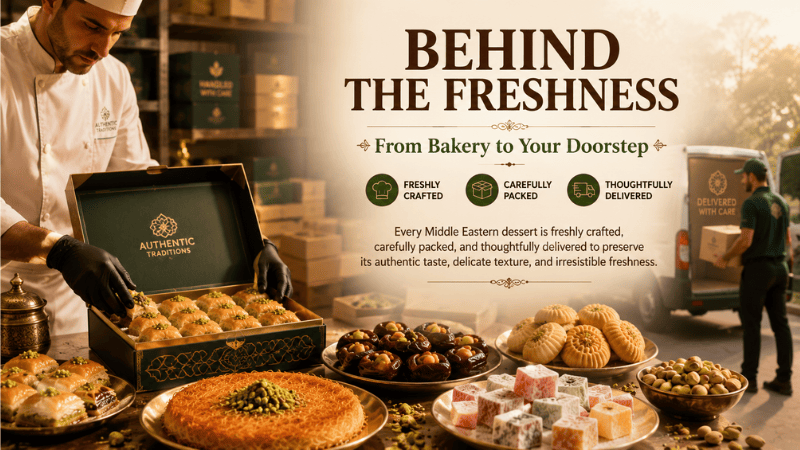
Getting a delicate dessert from a kitchen to your doorstep without losing its quality involves a fairly precise, multi-step process. Understanding it helps you judge which sellers are actually set up to deliver freshness and which are just shipping a box and hoping for the best. Here's the typical journey a dessert takes:
-
Sourcing and preparation. Desserts are either made in-house by the brand or sourced from trusted regional makers who specialize in traditional recipes, techniques, and ingredient quality. This is where authenticity starts; a rushed or mass-produced base can't be fixed later by good packaging.
-
Quality checks. Before anything is packed, batches are inspected for consistency in texture, sweetness level, color, and overall appearance. Reputable sellers reject batches that don't meet their own standard, even if it means delays.
-
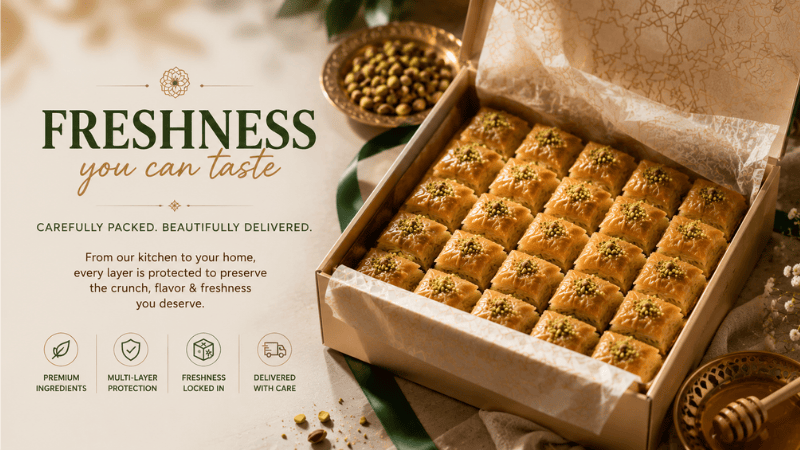
Protective packaging. Layers such as food-grade liners, moisture absorbers, and rigid outer boxes are used to protect shape and crunch during transit. For layered pastries, especially, the packaging has to prevent both crushing and sweating.
-
Temperature and humidity control. For more perishable items think cheese-based desserts or ice creams insulated packaging, gel packs, or in some cases genuine cold-chain logistics help slow spoilage and preserve texture until the last mile.
-
Fast-tracked shipping. Orders are routed through express courier networks specifically to minimize the number of days a dessert spends outside proper storage conditions. The fewer touchpoints and transfers, the better.
-
Last-mile delivery. This final step is often the most unpredictable part of the whole chain, depending heavily on local courier reliability, weather, and how quickly the package reaches your hands after it lands in your city.
Local sweet shops have a natural advantage here simply because the distance involved is so much shorter: a box of baklava can go from oven to your doorstep within hours, with almost no chance for quality to degrade. Long-distance and international delivery, by contrast, has to solve for customs clearance, extended transit times across borders, and fluctuating temperatures across different legs of the journey. This is precisely why brands that invest deliberately in better packaging, tighter logistics partnerships, and realistic delivery windows tend to deliver a noticeably fresher, more satisfying product and why not every seller online can make that claim credibly.
The Freshness Challenge: Why Delicate Desserts Are So Hard to Ship Well
This is where most delivery experiences fall short, and it's worth understanding in real depth because it's the single biggest content gap most guides skip over. Desserts like kunafa, ballouria, midye, and other syrup-soaked pastries are essentially fighting a three-front battle against moisture, heat, and time and every one of those fronts gets harder to manage the farther the dessert has to travel, especially for global or cross-border delivery.
Moisture is often the first enemy. It softens crisp phyllo layers and can turn a crunchy baklava into a soggy, unappetizing mess within a single day if the packaging isn't sealed correctly or if moisture-absorbing materials aren't used. This is particularly tricky for desserts with a syrup component, since the syrup itself can migrate and pool if the box isn't oriented and cushioned properly during transit.
Heat during transit especially relevant in Indian summers, but equally a concern for any tropical or hot-climate destination can melt sugar glazes, cause nut toppings to slide off, or make delicate layers stick together in ways that ruin presentation and texture. This is one of the main reasons some sellers now use insulated packaging or, for higher-value shipments, limited cold-chain elements even for products that aren't traditionally thought of as "cold" items.
Time is the quieter, less visible factor, but arguably the most important one. Even with technically perfect packaging, a dessert that sits in a warehouse, a customs holding area, or a transit hub for several extra days will lose some of its intended texture and aroma the very qualities that make it worth ordering in the first place rather than settling for something shelf-stable and mass-produced.
For international or long-distance orders specifically, this challenge multiplies. Sellers have to navigate customs documentation requirements for food items, which can add unpredictable delays; account for extended transit times across multiple legs of a journey, sometimes involving several different couriers; and choose preservation methods such as reduced-moisture recipes, vacuum-sealed components, or specially formulated syrups that are engineered to hold up better over multi-day journeys without compromising on taste. Some brands are also exploring subscription-style or recurring delivery models for customers who want a regular supply of fresh desserts rather than placing one-off orders, which in turn lets them plan production and shipping schedules more precisely and reduce the freshness gap caused by unpredictable, sporadic demand.
It's a genuinely difficult logistics problem, and it's exactly the area where a thoughtful, delivery-first brand can stand apart from a generic courier-based seller who simply lists products online without solving for any of this behind the scenes. Brands like Bekdash.us, for example, have built nationwide delivery specifically around authentic Middle Eastern sweets including mastic-infused Arabic ice cream and flaky baklava sent directly to customers' doors, which shows how seriously specialist sellers are now taking this challenge. Similarly, platforms like Govindam.co.in have made it possible to order authentic Arabic sweets such as baklava and kunafa online, extending access to these desserts well beyond their traditional geographic markets.
How DeliciousKart Approaches Fresh Middle Eastern Dessert Delivery
This is precisely the space where DeliciousKart has built its offering. Rather than treating delivery as an afterthought bolted onto a product catalog, DeliciousKart curates a selection of beloved regional sweets and snacks with a deliberate emphasis on authentic flavor the kind that evokes nostalgia and familiarity rather than a mass-produced aftertaste that could have come from anywhere.
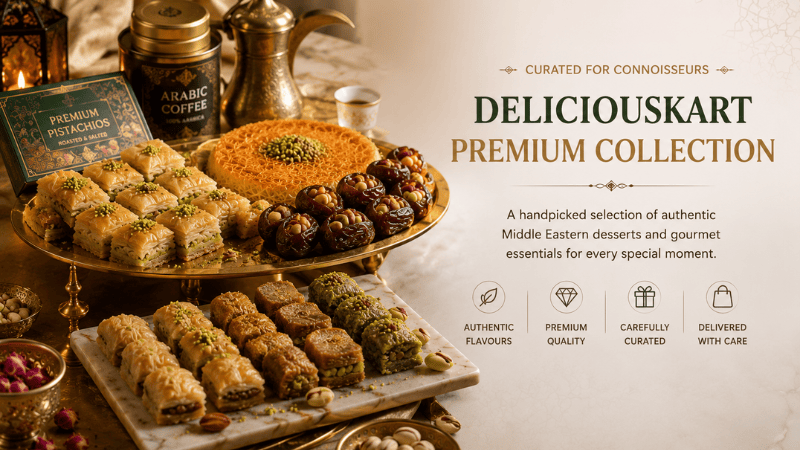
If you're exploring the platform for the first time, its premium brands collection is a good starting point. It brings together carefully sourced, gourmet-grade products under one roof, so you don't have to hunt across multiple stores, compare five different sellers, or gamble on an unfamiliar name just to find something authentic. This curation approach matters more than it might seem: when a platform is deliberate about which premium brands it partners with, it's effectively doing the quality-control legwork on your behalf before an item ever reaches checkout.
For those with a sweet tooth that extends beyond Middle Eastern classics, DeliciousKart also stocks MILI CANDY, a well-loved name for Punjab-style candies and confections. It pairs nicely as an add-on for gifting boxes or festive hampers imagine a box that combines a few pieces of baklava or kunafa with a handful of MILI CANDY treats for a spread that bridges regional traditions in a single gift. This kind of mix-and-match approach is increasingly popular among shoppers who want their gift boxes to feel personal rather than generic.
And if your order is more about pairing dessert with something savory a common instinct when building out a proper at-home spread the tea time snacks collection rounds out the experience nicely. It's ideal for anyone assembling a full tea or coffee spread alongside their sweets, whether that's for a weekend gathering, a festive occasion, or simply an elevated evening snack routine at home.
What sets DeliciousKart apart in the broader "fresh delivery" conversation is this emphasis on carefully sourced products, transparent brand collections, and a shopping experience designed to make exploring regional and gourmet items simple from the comfort of home. Instead of guessing whether a random online seller can actually preserve a delicate dessert in transit, customers get the reassurance of shopping through a platform that has built its entire catalog around authenticity and quality sourcing as core principles rather than marketing language. Customers can easily explore and order carefully sourced gourmet products without leaving home, and that convenience, paired with a genuine focus on flavor, is what keeps people coming back rather than treating each order as a one-time experiment.
How to Get Started with Ordering Fresh Middle Eastern Desserts Online
Ready to place your first order, or upgrade the way you've been shopping for these desserts so far? Here's a simple, practical approach that applies whether you're buying for yourself or planning a gift.
-
Start with a trusted, curated platform: Browse a well-organized collection like DeliciousKart's premium brands page rather than clicking through an unverified marketplace listing with no real information about sourcing or packaging.
-
Check packaging details before you buy: Look for product descriptions or customer reviews that specifically mention protective packaging, since this is the single biggest factor determining whether your order arrives fresh or disappointing.
-
Match your order to your timeline: If you need desserts for a specific event a festival, a family gathering, a gift deadline, order a few days in advance to account for realistic transit variability rather than cutting it close.
-
Bundle smartly for a fuller experience: Pair your dessert order with complementary items, such as MILI CANDY sweets or the tea time snacks collection, to build a more complete gifting box or personal treat spread rather than a single isolated item.
-
Read the fine print on delivery charges and timelines: These vary by city and courier, so it's worth confirming both before checkout to avoid surprises, particularly if you're ordering for a time-sensitive occasion.
-
Consider your order size and frequency: If you find yourself craving these desserts regularly, look into whether your preferred platform offers recurring or subscription-style options, which can work out more convenient and sometimes more cost-effective than repeated one-off orders.
Once you've placed an order, keep an eye on delivery tracking where available, and try to receive the package promptly rather than letting it sit, so you can enjoy the desserts at their intended best rather than after unnecessary extra hours in transit or storage

Key Takeaways
-
Freshness is the real challenge, not availability: Authentic Middle Eastern desserts are widely available online today; the harder problem sellers have to solve is preserving texture, aroma, and taste across the delivery journey.
-
Moisture, heat, and time are the three enemies of delicate pastries: Layered, syrup-based desserts like baklava and kunafa are especially vulnerable, which is why packaging and shipping speed matter more than they might seem to.
-
Local delivery has a natural freshness advantage: while international or long-distance orders need extra investment in packaging, customs handling, and preservation methods to close that gap.
-
Pricing reflects premium sourcing: Ingredients like imported dates, nuts, and specialty syrups justify higher costs, so freshness and authenticity should be non-negotiable at that price point.
-
Not all sellers are equal: A brand's packaging practices, sourcing transparency, and delivery track record matter more than price alone when choosing where to order from.
-
Bundling and customization add value: Pairing traditional sweets with items like MILI CANDY or the tea time snacks range can turn a simple order into a fuller, more memorable gifting experience.
-
DeliciousKart's curated premium brands collection offers a reliable, freshness-focused starting point for anyone looking to order authentic Middle Eastern desserts online with confidence.
Frequently Asked Questions
Can Middle Eastern desserts actually stay fresh during home delivery?
Yes, when sellers use proper protective packaging and efficient, well-planned shipping. The biggest factors influencing freshness are moisture control, temperature management during transit, and how quickly the package reaches you after dispatch.
How much does dessert delivery typically cost?
Within Indian cities, delivery charges have generally ranged from around INR 50 to INR 150, depending on the provider, the size of your order, and the distance being covered.
Are imported ingredients like Middle Eastern dates or nuts expensive?
Yes, specialty items such as stuffed dates sourced from Jordan or Saudi Arabia can cost between INR 1,000 and INR 2,500 per kilo at gourmet stores, reflecting their premium sourcing and limited availability compared to mass-market alternatives.
What's the best way to order a gift box of Middle Eastern sweets?
Choose a platform with genuine customization options, such as assortment selection or personalized gifting messages, and consider pairing traditional sweets with complementary items like DeliciousKart's tea time snacks collection or MILI CANDY for a fuller, more memorable gift.
Is it possible to get nationwide or international delivery of these desserts?
Yes, several brands now offer nationwide shipping of authentic Middle Eastern sweets, though international delivery involves additional considerations such as customs clearance, extended transit times, and preservation methods suited to longer journeys.
Do subscription or recurring delivery options exist for these desserts?
Some sellers are beginning to offer subscription-style or recurring delivery for customers who want a regular, ongoing supply rather than placing individual orders each time, which can also help sellers plan production and shipping more precisely for consistent freshness.
Shop authentic Middle Eastern desserts at DeliciousKart and enjoy freshness delivered to your doorstep.