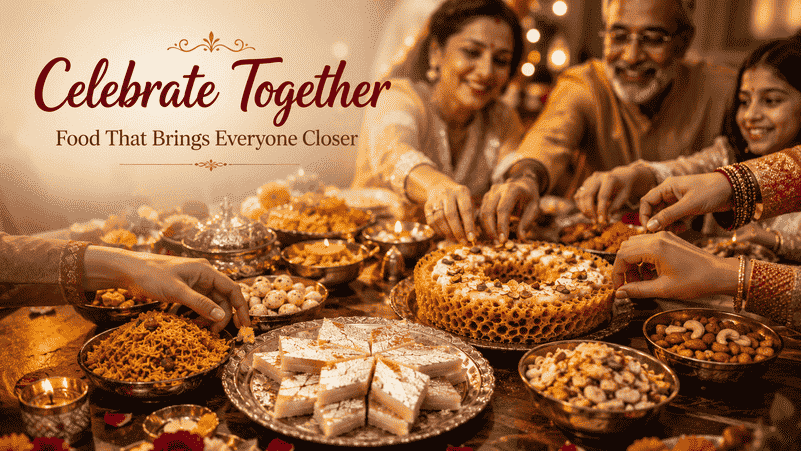
"A house without Mithai is a house that hasn't celebrated anything yet." It's the kind of line an elder in almost any Indian household might say, half in jest, half in complete seriousness. And they wouldn't be wrong. Walk into any Indian celebration a wedding, a Rakhi lunch, a Diwali evening, a random Tuesday that turned into a get-together and there's a good chance a box of something sweet is doing the rounds before anyone's even sat down properly. Two names show up again and again on that box: Kaju Barfi and ghevar. Add a plate of something crunchy and savoury next to them, and they've basically covered the whole spread.
This piece digs into why these two sweets have earned such a permanent seat at the table, how they're different from each other, and how they fit into the bigger picture of what actually makes a party snack table work: sweet, savoury textures, timing, all of it.
Why Mithai Season in India Never Really Slows Down
There's a popular (and only slightly exaggerated) joke that India doesn't really have an "off season" for sweets. Rakhi bleeds into Janmashtami, which bleeds into Ganesh Chaturthi, which leads straight into Navratri and Diwali, and by the time that's wrapped up, wedding season has already started. Somewhere in the middle of all that, the monsoon brings its own reason to celebrate: Teej.
This layering of festivals is exactly why mithai shops treat the July–September stretch as their busiest window of the year, sometimes even calling it a monsoon mithai trail internally, since it strings together Teej, Rakhi, and Janmashtami into one long sweet-buying season. It's less about any single festival and more about a rhythm one celebration handing the baton to the next, with a sweet box changing hands every time.
Kaju barfi and ghevar sit right at the center of that rhythm, but for very different reasons, which is worth unpacking.
The Diamond on the Festive Table: What Makes Kaju Barfi Special
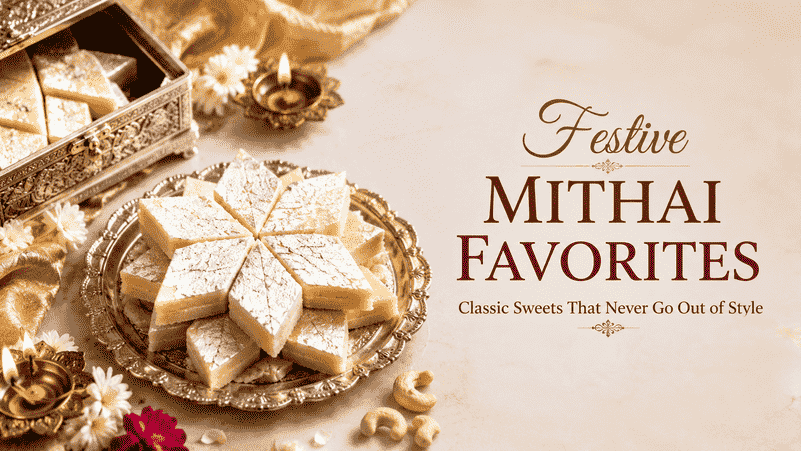
Kaju barfi also called kaju katli is instantly recognisable: thin, diamond-cut pieces with a pale ivory colour, sometimes finished with a layer of edible silver foil (vark) that catches the light just right on a festive table. It's made from just a handful of ingredients: cashews, sugar, a touch of ghee, and often a hint of cardamom, ground into a smooth dough and rolled thin before being cut into those signature diamond shapes.
What's interesting is that, unlike most other barfis, kaju katli typically skips milk or khoya altogether, relying purely on cashew paste for its texture. That's part of why it's often naturally gluten-free and, in its most traditional form, dairy-light a detail that's made it a fairly common pick even for guests who are cautious about heavier, ghee-and-khoya-based sweets. Cashews themselves bring a decent nutritional profile to the table too, contributing healthy fats, protein, and minerals like copper and magnesium, which is a big part of why the sweet has stayed associated with indulgence that still feels a little more "refined" than others.
There's also the diamond shape itself, which isn't just for looks. Local legend ties it to royal aesthetics, the idea that the cut was meant to echo the facets of a cut diamond, giving an everyday sweet the visual weight of a luxury item. Whether or not that's the literal origin, it's stuck: kaju katli reads as premium in a way few other mithais do, which is exactly why it's the default choice for gifting, not just eating.
Ghevar: The Monsoon's Honeycomb Marvel
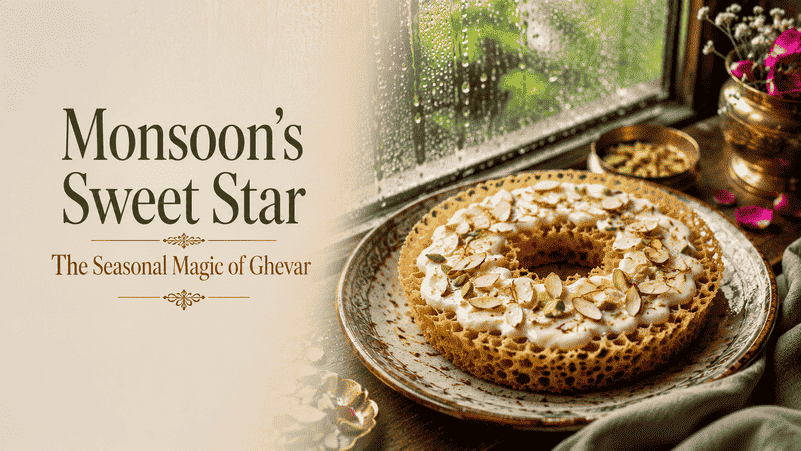
If kaju barfi is precision and polish, ghevar is texture and drama. It's a disc-shaped sweet with a lacy, honeycomb structure, made by pouring a thin batter of flour, ghee, and milk into hot oil, where it puffs up into that distinctive porous pattern. Once fried, it's soaked in sugar syrup and usually finished with a layer of rabri (thickened, sweetened milk) and a scatter of chopped nuts.
What makes ghevar genuinely unusual is its relationship with weather. Its airy, web-like structure needs humidity to hold its shape properly, which is exactly why it's traditionally made and eaten only during the monsoon months, roughly July through September. Outside that window, most mithai shops simply don't stock it, which gives ghevar a kind of seasonal exclusivity that few other sweets have. It's less "always available" and more "catch it while it's here."
Why Ghevar and Teej Are Practically the Same Conversation
Ask anyone from North India what ghevar reminds them of, and the answer is almost always Teej. The two are so closely linked that mentioning one basically implies the other.
Teej itself isn't a single festival; it's a cluster of monsoon celebrations. In 2026, Hariyali Teej falls on Saturday, August 15, while Kajari Teej follows a few weeks later on Monday, August 31. Both center on married and unmarried women observing fasts and prayers for marital wellbeing, and both traditionally involve breaking or marking that fast with ghevar as the featured sweet, alongside dishes like malpua and kheer.
There's also a practical, almost energy-science reason ghevar fits the occasion so well. Since many women observe a strict fast, sometimes even a nirjala vrat without water through the day, a calorie-dense, ghee-and-sugar-rich sweet like ghevar functions as an efficient way to restore energy quickly once the fast ends. Add the fact that it visually resembles a monsoon flower or a lotus, and it's easy to see why it's become the edible symbol of the entire season rather than just another item on the sweets counter.
Building a Party Snack Table That Actually Works
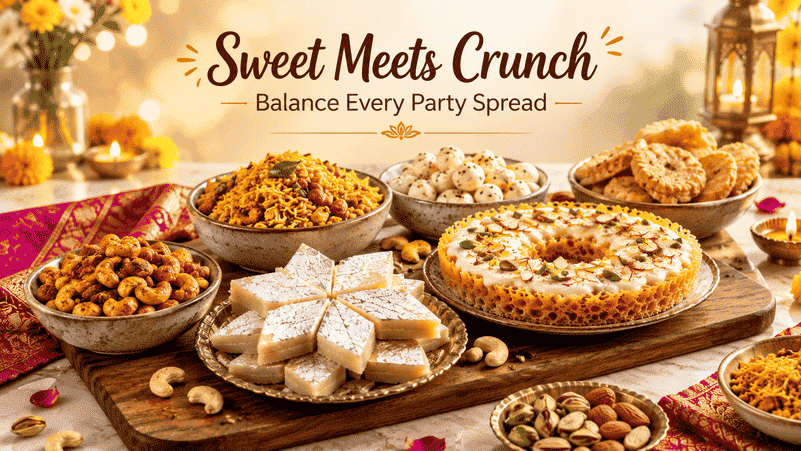
Here's where things widen out a bit because most Indian celebrations aren't just about mithai. They're about a full table, and a good one balances a few things: something sweet, something savory and crunchy, something that can sit out for a few hours without going soft, and something that photographs well when the group inevitably takes a table shot before digging in.
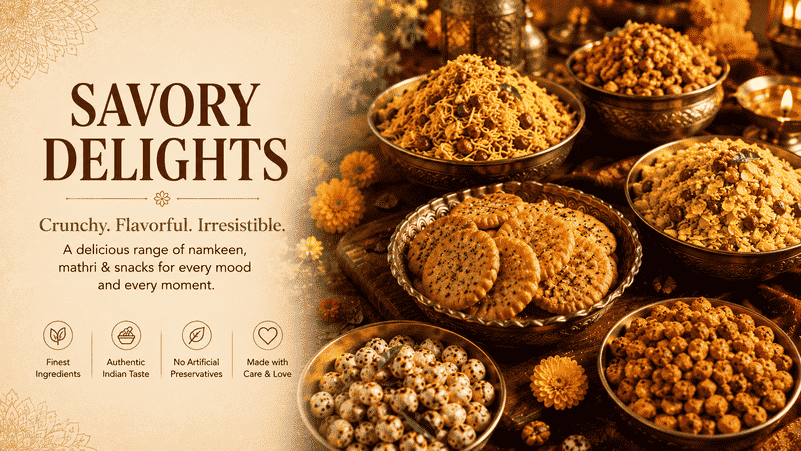
Savory snacks carry a lot of that weight. Think namkeen mixtures, mathri, chivda, spiced nuts, or fried snacks like kachori and samosas dishes that are built to hold their crunch and their flavor over a few hours of grazing, unlike a lot of fresh, dairy-heavy sweets. It's worth noting that India's savory snacks market everything from nuts and namkeen to chips has been on a steady upward trend through the mid-2020s, which says a lot about how central this category has become to everyday snacking and not just festive spreads.
The trick is thinking of sweet and savory as two halves of the same table rather than competing categories. Kaju barfi and ghevar bring the rich, celebratory notes; a bowl of spiced namkeen or crispy mathri next to them cuts through that richness and keeps guests coming back for more rounds of both.
Pairing Kaju Barfi and Ghevar with Savory Snacks the Right Way
A few practical pairing ideas that tend to work well on an actual party table:
-
Kaju barfi + spicy namkeen mix: The barfi's smooth, mellow sweetness pairs nicely against something with a sharp, spiced crunch; the contrast keeps either one from feeling like "too much" too fast.
-
Ghevar + roasted or masala nuts: Since ghevar already carries rabri and nuts on top, keeping the savory side simple a masala peanut or roasted makhana bowl avoids overloading the palate.
-
Both sweets + a light, tangy snack: Something like a chaat-style item or namak para with a tangy edge resets the palate between sweet bites, which matters a lot at longer gatherings where people are grazing for hours, not just eating one plate and leaving.
Serving order matters too. Most seasoned hosts put savory snacks out first, while guests are still arriving and settling in, and bring the sweets especially something as rich as ghevar out a little later, once people have eaten enough that the sweetness lands as a proper finish rather than an overload.
Ordering, Storing, and Serving Mithai Without the Stress
Buying mithai for a party used to mean a dedicated trip to a trusted local sweet shop and for a lot of families, it still does, especially for sweets tied to a specific city's reputation. Old Delhi, for instance, has long been associated with some of the most well-regarded ghevar makers, where the sweet is still made fresh through the season.
These days, though, ordering online has become a completely normal part of party planning, especially for people short on time or ordering for guests in another city. If kaju barfi is on the shopping list, this fresh Kaju Barfi from Hira Sweets, Delhi is a solid pick for anyone who wants a shop-fresh box without leaving home. For the monsoon-only specialty, the Special Malai Ghewar from Chaina Ram, Chandni Chowk comes from one of Old Delhi's most established names for exactly this sweet. And to round out the table with the savory side of things, there's a full collection of savory party snacks worth browsing for namkeen, mathri, and other crunchy essentials.
A few storage basics are worth keeping in mind regardless of where the mithai comes from:
-
Kaju barfi keeps reasonably well at room temperature for a couple of days in an airtight container, and longer if refrigerated. Just let it come back to room temperature before serving so the texture stays soft rather than stiff.
-
Ghevar is best eaten fresh, ideally within a day or two, since its structure and crispness fade the longer it sits. This is also exactly why it doesn't travel or store as well as denser sweets.
-
Savory snacks like namkeen and mathri are the most forgiving of the three, often staying crisp for weeks in a sealed container, which makes them easy to prep or order well ahead of the actual event.
Choosing Authentic Mithai Online: What Actually Matters
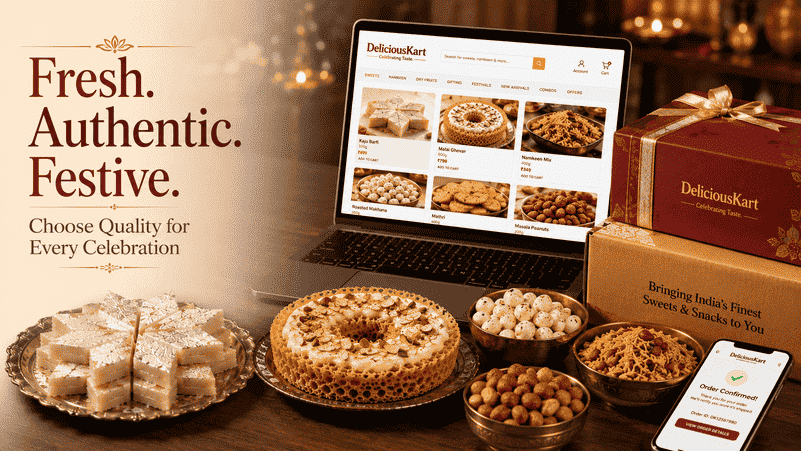
With so many options available now, a few things separate a genuinely good mithai order from a disappointing one:
-
Freshness over shelf life : sweets like ghevar and even kaju barfi taste noticeably better made fresh for the order rather than mass-produced and stored.
-
Named, traceable sources : shops that credit a specific, established maker (the way a listing might name a particular Old Delhi sweet house) tend to be more accountable for quality than generic, unnamed listings.
-
Ingredient transparency : real kaju katli should list cashews, sugar, and ghee as its core ingredients, without a long list of preservatives or artificial flavoring standing in for the real thing.
-
Reviews tied to freshness and packaging : not just taste since sweets like ghevar can be delicate, how well they survive transit matters just as much as how they taste on day one.
Key Takeaways
-
Kaju barfi (kaju katli) is a cashew-based, dairy-light sweet with two competing royal origin stories one Maratha, one Mughal and its diamond shape has made it India's default gifting mithai.
-
Ghevar is a monsoon-only, honeycomb-textured sweet that depends on humidity to hold its structure, which is exactly why it disappears from shelves outside the July–September window.
-
Ghevar is deeply tied to Teej, with Hariyali Teej falling on August 15, 2026, and Kajari Teej on August 31, 2026 both featuring ghevar as the sweet used to break the day's fast.
-
A strong party snack table balances rich, sweet mithai with crunchy, spiced savory snacks, and serving order (savory first, sweets later) can shape how guests experience both.
-
Freshness, traceable sourcing, and honest ingredient lists matter more than packaging when ordering mithai online especially for delicate, monsoon-dependent sweets like ghevar.
FAQ
Q: What's the difference between kaju barfi and kaju katli?
A: They're the same sweet. "Katli" refers to the thin, sliced form, while "barfi" is the broader category of milk-and-sugar-based sweets it belongs to, so the two names are used interchangeably.
Q: Why is ghevar only available during certain months?
A: Ghevar's airy, honeycomb texture depends on humidity to set and hold its shape properly, which is why it's traditionally made only during the monsoon season, roughly July through September.
Q: Is kaju barfi vegan-friendly?
A: Traditional kaju barfi is typically made without milk or khoya, relying on cashews, sugar, and a small amount of ghee, so it's often naturally closer to vegan than most other Indian sweets though recipes that include ghee or a milk-based glaze wouldn't qualify, so it's worth checking with the specific maker.
Q: How far in advance can mithai be ordered for a party?
A: Kaju barfi can usually be ordered a few days ahead since it holds up well in an airtight container, but ghevar is best ordered as close to the event as possible, ideally a day or two out, since its texture doesn't hold for long.
Q: What savory snacks pair best with sweet mithai at a party?
A: Spiced namkeen mixes, mathri, roasted nuts, and chivda tend to work best, since their crunch and spice balance out the richness of sweets like kaju barfi and ghevar without competing for attention.
Ready to build the perfect Indian party snack table? Explore DeliciousKart's range of authentic mithai and savory snacks, and make every celebration sweeter.