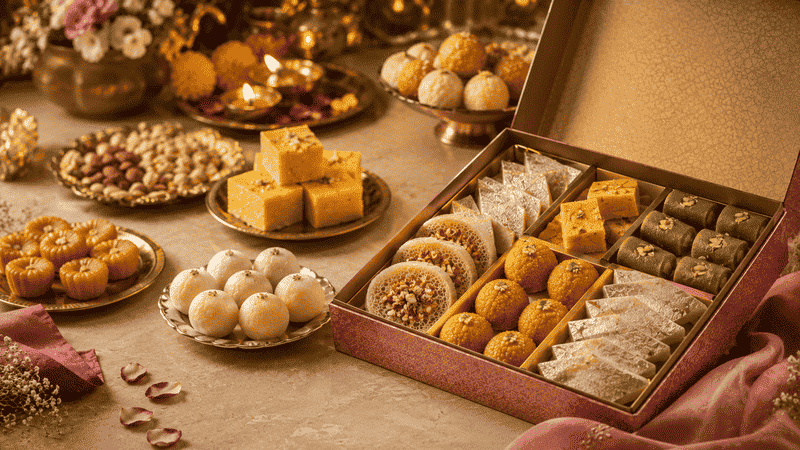
Ever wondered why the mithai box that showed up at your door last Diwali tasted better than the one from the shop three streets away? It's not a coincidence. Online sweet shops are changing what "fresh" and "new arrivals" actually mean in India's mithai world, and if you haven't shopped for sweets online yet, you're missing out on a genuinely better experience.
India's love affair with sweets isn't new. What is new is how people are buying them. Between quick commerce apps delivering laddoos in twenty minutes and dedicated online sweet stores dropping new arrivals every week, the traditional halwai shop down the road suddenly has a lot of competition. This guide walks through what's changed, why it matters, and how to make the most of buying traditional Indian foods and sweets online.
Why India's Sweet Shelves Look Different This Year
The Indian sweets market has been on a steady climb for years, but the pace has picked up noticeably. Industry estimates put the sweets and mithai market's value well into the billions of dollars, with the organized, branded segment growing much faster than the unorganized side of the business, according to industry research compiled by IMARC Group. A big part of that growth is coming from packaged and branded sweets, which are expanding at a much sharper rate than the market overall.
There's a simple reason for this shift: city life has changed. More households are nuclear rather than joint families, both partners are often working, and there's simply less time to stand over a kadhai making besan laddoo from scratch the way a grandmother once did. That gap hasn't reduced anyone's appetite for mithai if anything, urban households are eating traditional sweets more often than before. It has just moved the job of making them from the home kitchen to specialist producers and online stores that can do it at scale without cutting corners on taste.
New arrivals matter in this context because sweet shops, online and offline, are no longer just refilling the same five jars. They're introducing seasonal specials, regional varieties that never used to travel far from their home states, and healthier reformulations using less sugar or alternative sweeteners. Checking a store's new arrivals section regularly is genuinely worth doing if you want to catch limited releases before they sell out.
What Counts as "Traditional Indian Foods" Today
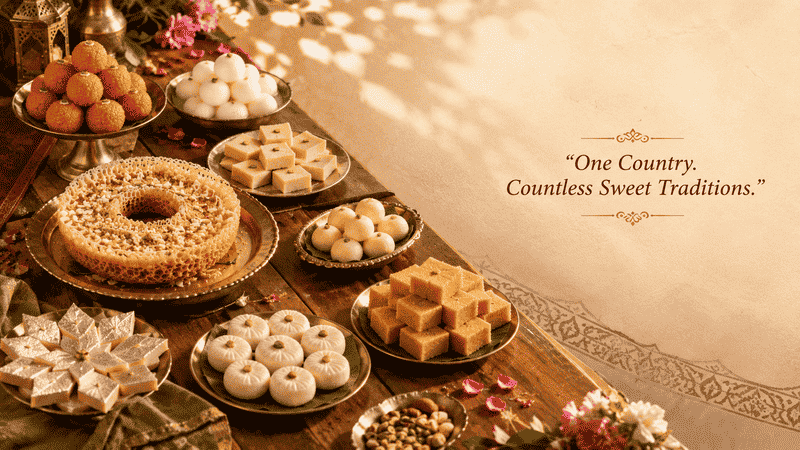
Traditional Indian foods used to mean whatever was made in your own region, by your own family, using recipes nobody wrote down. Today, thanks to e-commerce, "traditional" has become a much bigger, much more accessible category. A Bengali household can now order Karnataka's Mysore pak, a Delhi resident can get authentic Kerala banana chips, and someone in Mumbai can try Rajasthan's ghewar without ever visiting Jaipur.
This broadening matters because Indian food culture has always been intensely regional. What one state calls a sweet, another state might not even recognize. Bringing these foods online hasn't diluted that diversity it's actually helped preserve it, by giving small regional producers a way to reach customers far outside their traditional footprint. A halwai in a small town no longer needs a storefront in every city to be discovered; an online store's new arrivals page can do that job instead.
The Rise of Buying Sweets Online in India
A decade ago, buying sweets online sounded impractical. Wouldn't they melt, spoil, or arrive crushed? That worry has mostly disappeared. Better cold-chain logistics, vacuum sealing, and modified atmosphere packaging have made it possible to ship delicate, dairy-based sweets across the country and even internationally without losing freshness. Some Indian sweet brands are now shipping products as far as the United States and Australia using these packaging advances, based on reporting from YourStory on the growth of organized mithai brands.
The convenience factor has done the rest. Choosing to buy sweets online means you're not limited by a shop's opening hours, a queue during festival season, or the fact that your favourite mithai shop simply doesn't exist in your city. You browse, you pick a box size, you check out, and the sweets arrive at your door often within a day or two, and sometimes even faster through quick commerce platforms.
This shift shows up clearly during festivals. On big shopping days like Raksha Bandhan, some quick commerce platforms have reported sweets orders jumping to roughly four times their usual daily volume compared with regular days. That's not a small bump; it's a sign that online ordering has become a default behaviour, not a backup option, for a large chunk of festive shoppers.

Regional Mithai You Should Know About
If you're new to buying sweets online, it helps to know what you're actually choosing between. India's regional sweet map is enormous, but a few categories consistently show up as favourites and as new arrivals on most online stores:
-
Milk-based sweets: Rasgulla, rasmalai, sandesh, and kalakand soft, syrupy, and best eaten fresh, which is exactly why good cold packaging matters when ordering these online.
-
Ghee-based sweets: Motichur laddoo, besan laddoo, and the famous ghee Mysore pak, which remain some of the highest-selling items for many sweet brands.
-
Dry fruit and nut sweets: Kaju katli, badam barfi, and pista rolls, which tend to have a longer shelf life and travel especially well.
-
Fried and syrup-soaked sweets: Gulab jamun, jalebi, and imarti, which are indulgent, festive staples across most of North India.
-
Fusion and premium mithai: Rose-infused kaju katli, saffron barfi, and even matcha-flavored variants, part of a growing premiumization trend where gourmet twists on classic sweets are commanding much higher prices than standard offerings.
New arrivals sections on online sweet stores are a great way to explore this range without committing to a huge box. Many stores now offer smaller sampler packs specifically so first-time buyers can try several regional varieties before deciding on their favorites.
How Quick Commerce and Online Stores Are Changing Festival Shopping
Quick commerce the ten-to-thirty-minute delivery model made popular by apps like Blinkit, Zepto, and Swiggy Instamart has reshaped how urban India shops for almost everything, sweets included. During festivals such as Diwali, Holi, and Raksha Bandhan, these platforms now run dedicated sweets and festive-essentials sections, a shift that reflects just how mainstream online sweet shopping has become. Coverage of India's 2026 Holi season noted that quick commerce apps had widened their festive assortments well beyond groceries, adding traditional treats alongside colours and other seasonal items, as shoppers increasingly reached for their phones instead of making a trip to the local kirana store.
Dedicated online sweet stores serve a slightly different purpose. Where quick commerce is about speed and last-minute needs, a specialist online sweet shop is where people go for curated boxes, gifting hampers, and browsing new arrivals at a more relaxed pace planning a Diwali gift list a week in advance rather than scrambling the night before. Both models are growing, and together they've made "I forgot to buy sweets" a much less stressful problem than it used to be.

What to Look for Before You Buy Sweets Online
Not every online sweet purchase turns out well, so it's worth knowing what separates a good order from a disappointing one:
Freshness indicators: Look for a clearly stated shelf life, ideally with a manufacturing date rather than just an expiry date. Milk-based sweets should specify refrigeration requirements.
Ingredient transparenc: Genuine ghee-based sweets should say so explicitly; some cheaper alternatives use vegetable oil blends instead. If sugar content or preservatives matter to you, check the label before adding to cart.
Packaging quality: Vacuum-sealed or nitrogen-flushed packaging generally holds up better in transit than a simple cardboard box, especially for sweets travelling long distances.
Reviews and reordering data: A store with a healthy volume of repeat customers for a specific item is usually a safer bet than one with only a handful of reviews on everything.
Delivery timelines: For time-sensitive occasions, always check the estimated delivery window against your actual deadline, with a buffer day or two built in.
New Arrivals: How Online Stores Keep Traditional Foods Fresh
One underrated benefit of shopping through an online store's new arrivals section is variety without commitment. Instead of buying a large box of the same laddoo every time, you can rotate through limited releases, seasonal specials, and regional items the store has just added to its catalog. For a browsable example of how this works in practice, a site like DeliciousKart's new arrivals page regularly updates its listings, making it easy to spot what's just been added without hunting through an entire catalog.
This rotation isn't just a marketing gimmick it reflects genuine supply changes. Certain sweets are seasonal by nature (think ghewar during monsoon, or specific barfis that only make sense around Diwali), and a well-maintained new arrivals section is often the fastest way to catch these before they disappear again until next year.
Traditional Indian Foods Beyond Sweets Worth Ordering Online
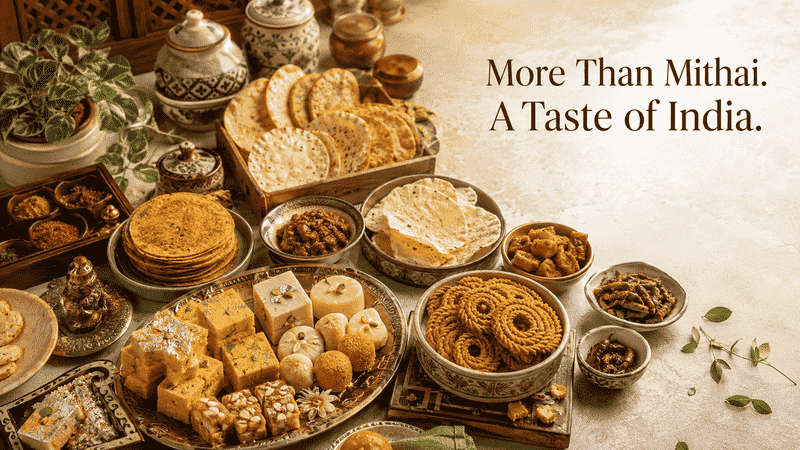
Mithai gets most of the attention, but "traditional Indian foods" covers a lot more ground, and online stores have expanded into this territory too. Pickles (achaar) made using decades-old family recipes, hand-ground spice blends, traditional snacks like chakli and mathri, and regional staples such as papad or khakhra are all increasingly available for home delivery. A dedicated traditional foods collection can be a useful starting point if you want to explore beyond the sweets aisle and stock up on pantry staples that are harder to find outside their home regions.
This expansion matters for the same reason mithai's growth matters: it keeps regional food traditions economically viable. A small producer making a specific style of pickle or snack that only ever sold locally can now reach a national audience, which helps sustain traditional recipes and techniques that might otherwise fade as fewer households make them at home.
Tips for Choosing the Right Online Sweet Shop
With so many options now available, picking where to buy sweets online can feel overwhelming. A few practical filters help narrow things down:
-
Check how often the store updates its new arrivals: Frequent updates usually signal an active, well-stocked business rather than a static catalog.
-
Look for a dedicated sweets collection: rather than sweets buried under a general grocery category, it usually means the store takes the category seriously.
-
Compare gifting options: Around festivals, hamper and gift-box variety matters as much as the sweets themselves.
-
Read the fine print on returns and refunds: for perishable items since policies vary a lot between sellers.
-
Test with a small order first: before committing to a large festival bulk purchase from a new store.
Key Takeaways
-
India's sweets market is growing quickly, and the organized, branded segment is expanding even faster than the industry as a whole.
-
Urban lifestyle changes, smaller households, and less time for home cooking are pushing more people toward packaged and online sweets rather than homemade ones.
-
Better packaging and cold-chain logistics have made it realistic to buy sweets online without worrying about freshness or spoilage.
-
Quick commerce apps now treat festive sweets as a core category, with order volumes spiking sharply around occasions like Raksha Bandhan and Holi.
-
New arrivals sections are worth regularly checking since seasonal and regional sweets often appear for a limited time only.
-
Traditional Indian foods extend well beyond mithai, and pickles, snacks, and regional staples are increasingly available online too.
FAQ
Is it safe to buy milk-based sweets like rasgulla or rasmalai online?
Yes, as long as the seller uses proper cold-chain packaging and states clear refrigeration and shelf-life instructions. Check for recent manufacturing dates and store reviews specific to milk-based items before ordering.
How do I know if an online sweet shop's "new arrivals" are actually new?
Look at how frequently the section updates and whether items are tied to a season or festival. Stores that rotate stock regularly and remove sold-out items tend to be more reliable than those with a static, unchanging list.
What's the difference between ordering sweets on a quick commerce app versus a dedicated online sweet store?
Quick commerce is built for speed and last-minute needs, typically delivering within minutes to a few hours. Dedicated sweet stores usually offer a wider selection, better gifting options, and more detailed information about ingredients, though delivery may take a day or two longer.
Can I find traditional Indian foods other than sweets online?
Yes. Pickles, spice blends, traditional snacks, and regional pantry staples are increasingly sold through the same online stores that offer mithai, often in a separate traditional foods or pantry collection.
Do online sweets cost more than buying from a local shop?
Not necessarily. Pricing depends more on ingredient quality real ghee versus vegetable oil blends, for instance than on whether the purchase happens online or offline. Premium and gourmet variants will cost more regardless of the channel.
Discover fresh arrivals, traditional sweets, and regional favourites at DeliciousKart Explore the latest mithai and order your favourites online today.