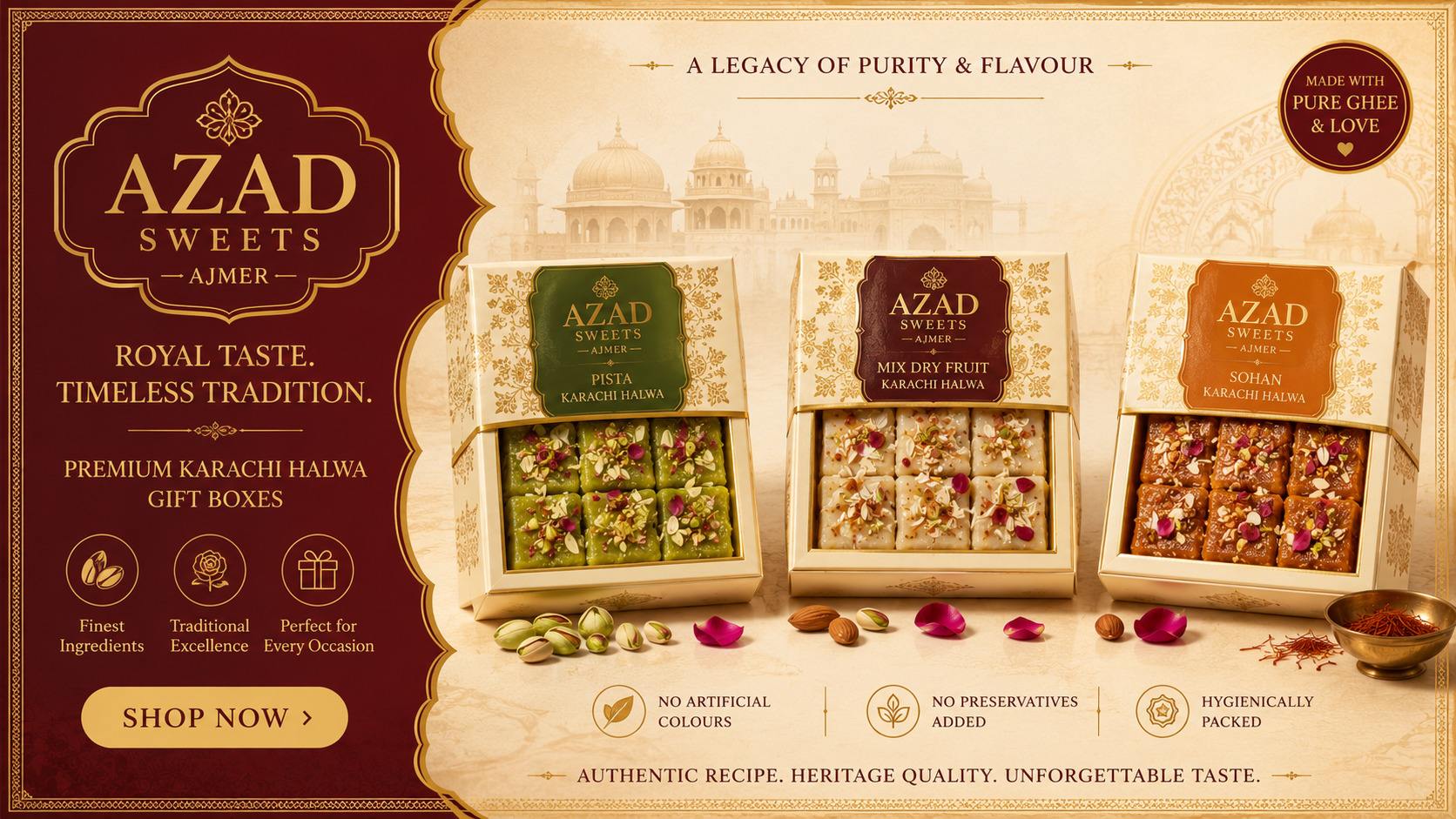
Introduction: The Sweet Memory That Never Fades
There are certain tastes that stay with you long after the last bite, flavours that carry the weight of nostalgia, tradition, and craftsmanship in equal measure. For millions of Indians, one such taste is that of Pista Karachi Halwa, a confection so richly flavoured, so gloriously textured, and so deeply rooted in cultural heritage that it occupies a special place in our collective memory.
When we think about iconic Indian sweets that have stood the test of time, Ajmer emerges as a city that deserves far more credit than it typically receives. Home to the revered Dargah Sharif of Hazrat Khwaja Moinuddin Chishti, Ajmer has long been a crossroads of culture, pilgrimage, and gastronomy. It is here, in the bustling lanes near the dargah, that some of India's most celebrated sweet-making traditions were refined and perfected over generations.
we explore what makes Pista Karachi Halwa so irresistible, tracing its origins, ingredients, production process, and cultural significance. We also examine its delectable companion, the Mix Dry Fruit Karachi Halwa, and the timeless classic, Sohan Halwa Ajmer, three sweet treasures that together tell the story of a city's extraordinary confectionery legacy.
A Brief History of Karachi Halwa in India
The name Karachi Halwa carries a fascinating historical irony. Despite its name referencing Pakistan's largest city, this sweet is deeply woven into the fabric of Indian confectionery culture, particularly in cities like Ajmer, Bombay, and parts of Rajasthan. It was brought to India by skilled halwai families who migrated during the partition era, carrying their recipes and craftsmanship across newly drawn borders.
Over the decades, Karachi Halwa evolved from being a community-specific delicacy into a widely celebrated Indian sweet, loved across regions and communities. Today, it is prominently featured in sweet shops from Mumbai's Crawford Market to the old lanes of Ajmer, where establishments like Azad Sweets have elevated it to an art form.
How Ajmer Became a Halwa Capital
Ajmer's geography and religious significance made it a natural melting pot of culinary influences. Pilgrims travelling to the Dargah Sharif brought with them culinary traditions from Sindh, Punjab, UP, and Maharashtra. Local halwais absorbed these influences, adapting recipes to local tastes and available ingredients. The result is a distinct Ajmer school of sweet-making that blends Rajasthani richness with Mughal-era sophistication.
What Is Pista Karachi Halwa-Defining the Delicacy
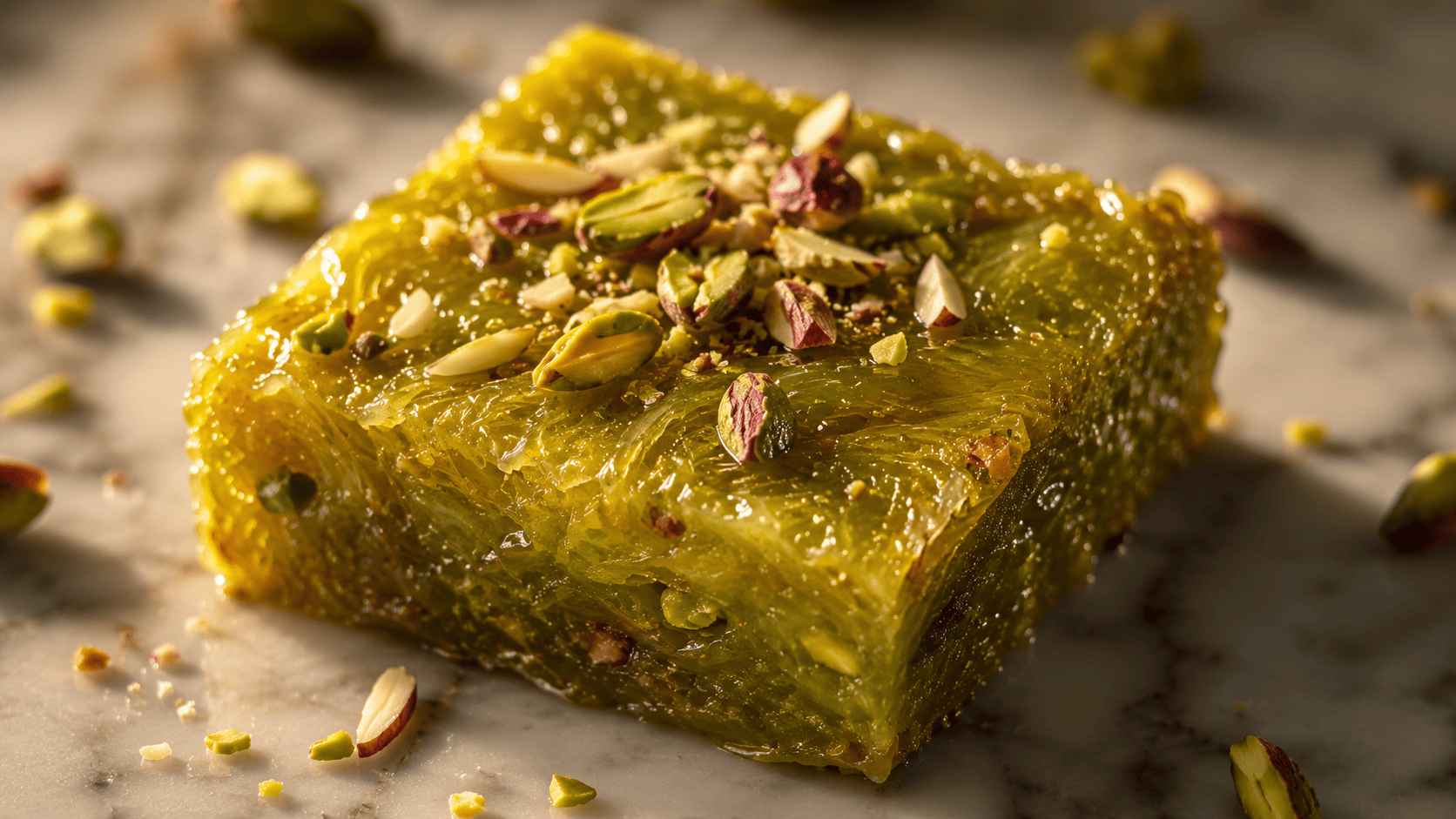
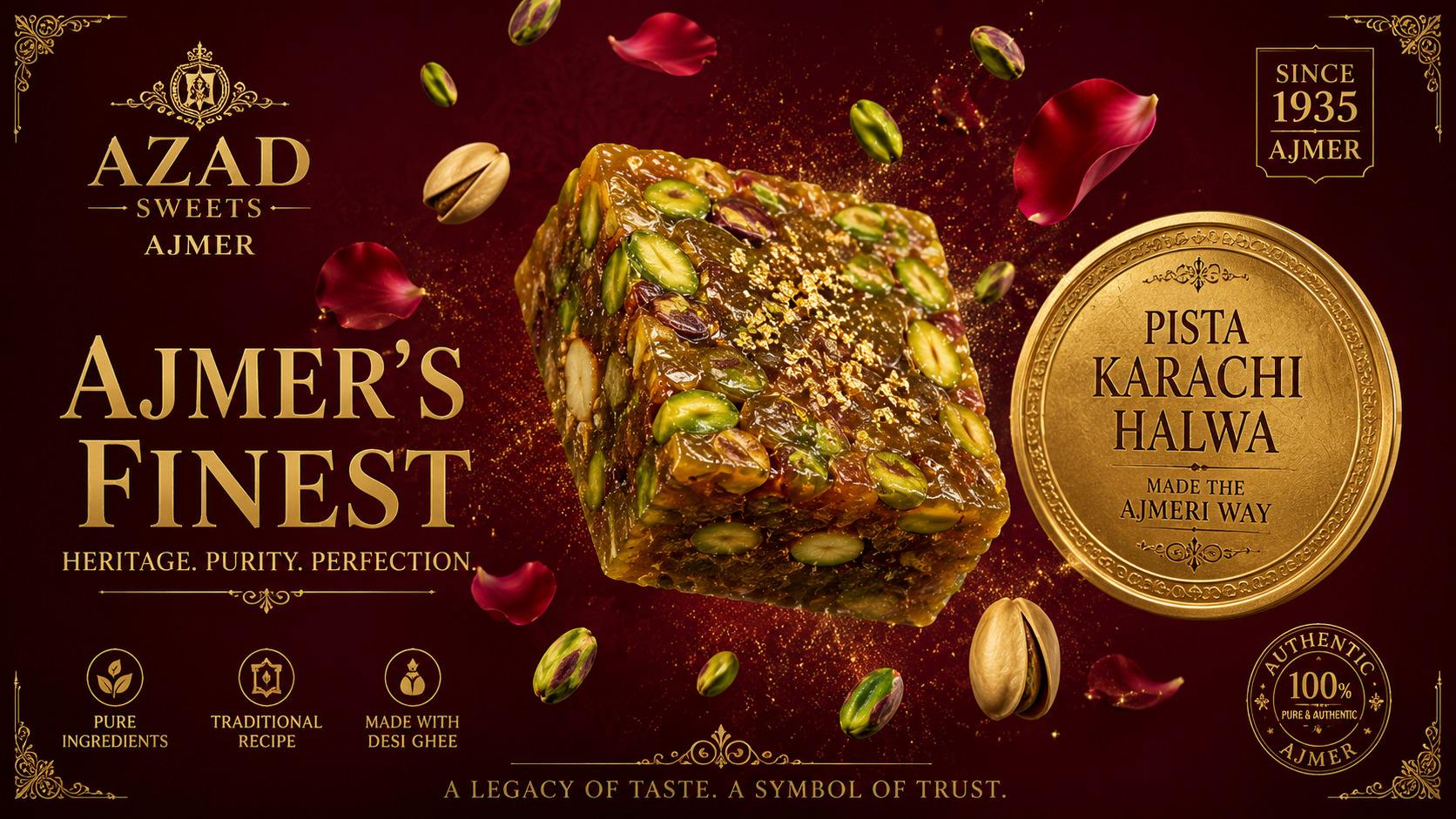
At its core, Pista Karachi Halwa is a firm yet melt-in-the-mouth confection made from cornflour (or sometimes gram flour), generous quantities of ghee, sugar, and, most importantly, a lavish coating or stuffing of crushed pistachios. The pista (pistachio) element is not merely decorative; it is integral to the flavour profile, contributing a subtle nuttiness that counterbalances the sweetness of the base.
The colour of Pista Karachi Halwa is typically a vivid green, achieved either through the natural colour of pistachios or through food-grade colouring. It is often sold in square or rectangular slabs, densely packed and generously garnished. Every piece is a statement of generosity, there are no half-measures in authentic Ajmer halwa
Texture: The Defining Characteristic
What truly sets Pista Karachi Halwa apart from other Indian sweets is its unique texture. Unlike the grainy crumble of a ladoo or the softness of a barfi, Karachi Halwa occupies a distinctive middle ground, it is firm enough to hold its shape, yet yields with the lightest pressure, dissolving on the tongue in slow, satisfying waves of sweetness and nuttiness.
Achieving this texture is a skilled affair. The batter must be cooked at a precise temperature and stirred continuously to prevent lumps, then cooled at the correct rate to ensure the desired consistency. Experienced halwais in Ajmer have perfected this through decades of practice.
The Ingredients That Make It Extraordinary
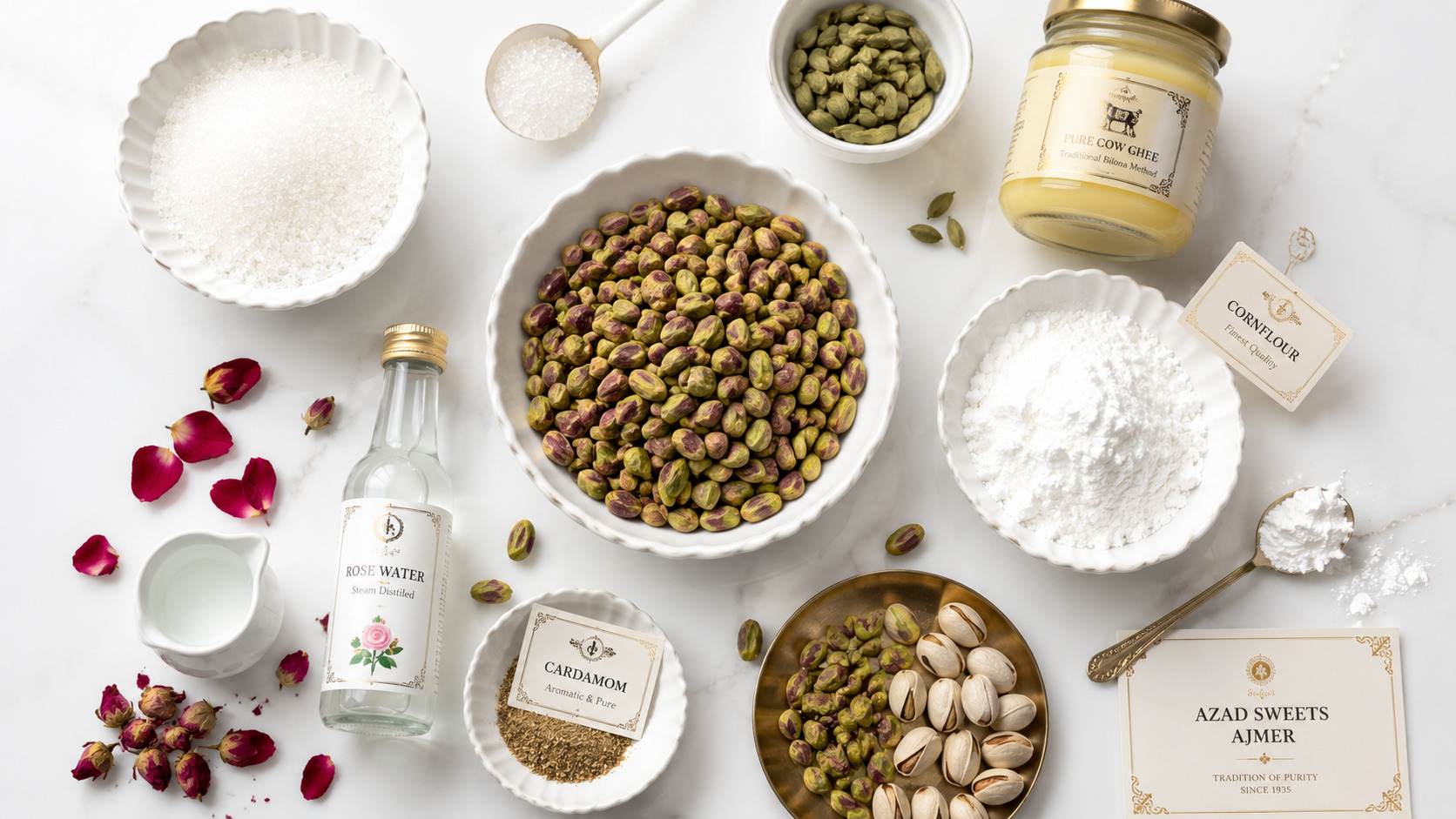
Understanding Pista Karachi Halwa means understanding its ingredients, each chosen with deliberate care:
Cornflour or Arrowroot Starch: This forms the structural base of the halwa, providing the characteristic chewiness.
Pure Ghee: Authentic preparations use generous quantities of clarified butter, giving the halwa its luxurious mouthfeel and slightly nutty aroma.
Fine Granulated Sugar: The sweetness level is calibrated carefully, never cloying, always balanced.
Premium Pistachios (Pista): The star ingredient. Quality Ajmer halwa uses whole or coarsely crushed Iranian or Kashmiri pistachios, generously incorporated throughout the halwa and atop the surface.
Rose Water or Kewra Essence: A few drops of this fragrant water lend a floral undertone that elevates the overall sensory experience.
Food-Grade Colour (optional): The iconic green hue of Pista Karachi Halwa is often enhanced with safe, permitted food colouring.
The Art of Making Karachi Halwa-A Traditional Process
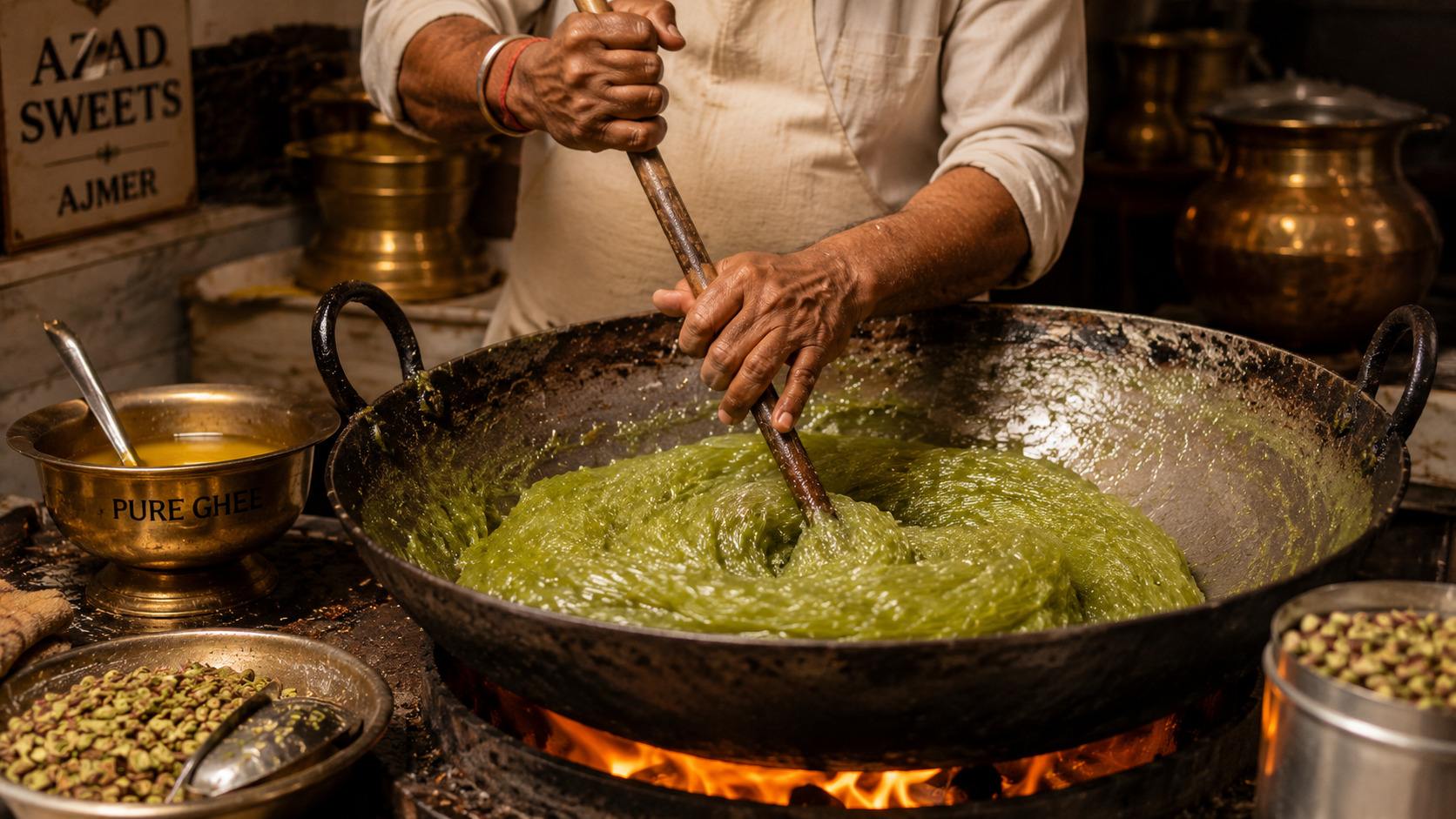
The preparation of Pista Karachi Halwa is genuinely artisanal. While modern machines have made some steps easier, the finest preparations in Ajmer still rely heavily on human skill, intuition, and experience. Here is how the process typically unfolds:
-
Preparation of Batter: Cornflour is dissolved in water and strained to remove lumps. The ratio of starch to water directly influences the final texture.
-
Cooking Over Controlled Heat: The batter is cooked over a medium flame with continuous stirring. Ghee is added gradually in multiple stages, allowing each addition to be fully absorbed before the next.
-
Sugar Integration: Dissolved sugar syrup is added at a specific stage, the temperature and concentration of the syrup matter enormously for texture.
-
Flavouring and Colouring: Rose water, cardamom powder, and the characteristic green colouring are added as the mixture thickens.
-
Pistachio Incorporation: Crushed or whole pistachios are folded in generously, ensuring an even distribution throughout the mass.
-
Setting and Cutting: The hot halwa is poured into greased trays, smoothed flat, and left to set. Once firm, it is cut into neat rectangular pieces and garnished with additional pistachios on top.
This process, from start to finish, typically takes three to four hours for a single large batch, a testament to the patience and dedication that goes into every piece.
Mix Dry Fruit Karachi Halwa-A Royal Upgrade
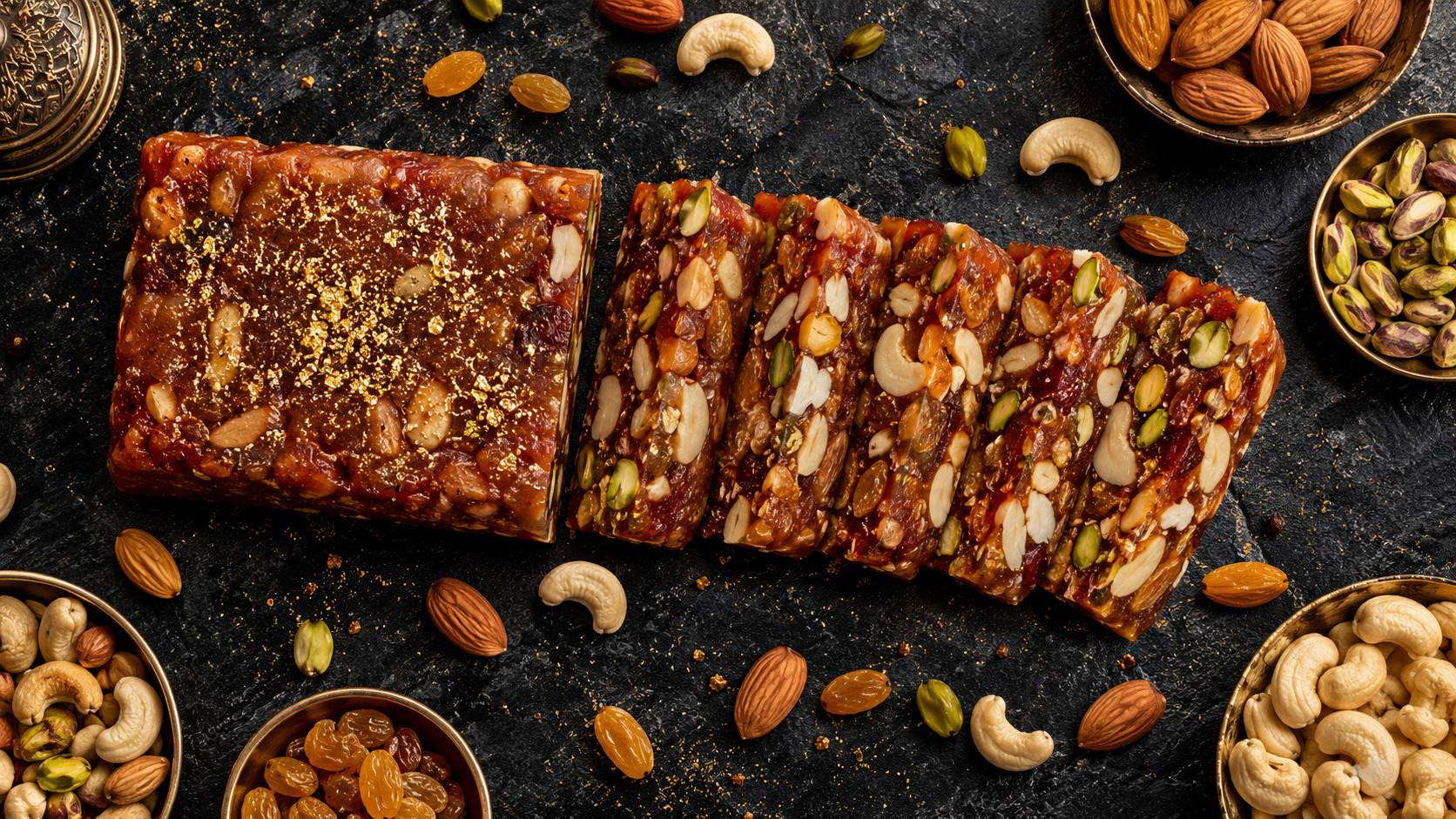
While Pista Karachi Halwa is magnificent in its own right, the Mix Dry Fruit Karachi Halwa takes the concept to an even more indulgent level. As the name suggests, this variant incorporates a medley of premium dry fruits, pistachios, cashews, almonds, walnuts, and raisins, into the halwa base, creating a multi-textured, multi-layered experience that is truly exceptional.
Why Mix Dry Fruit Karachi Halwa Is the Gifting Choice
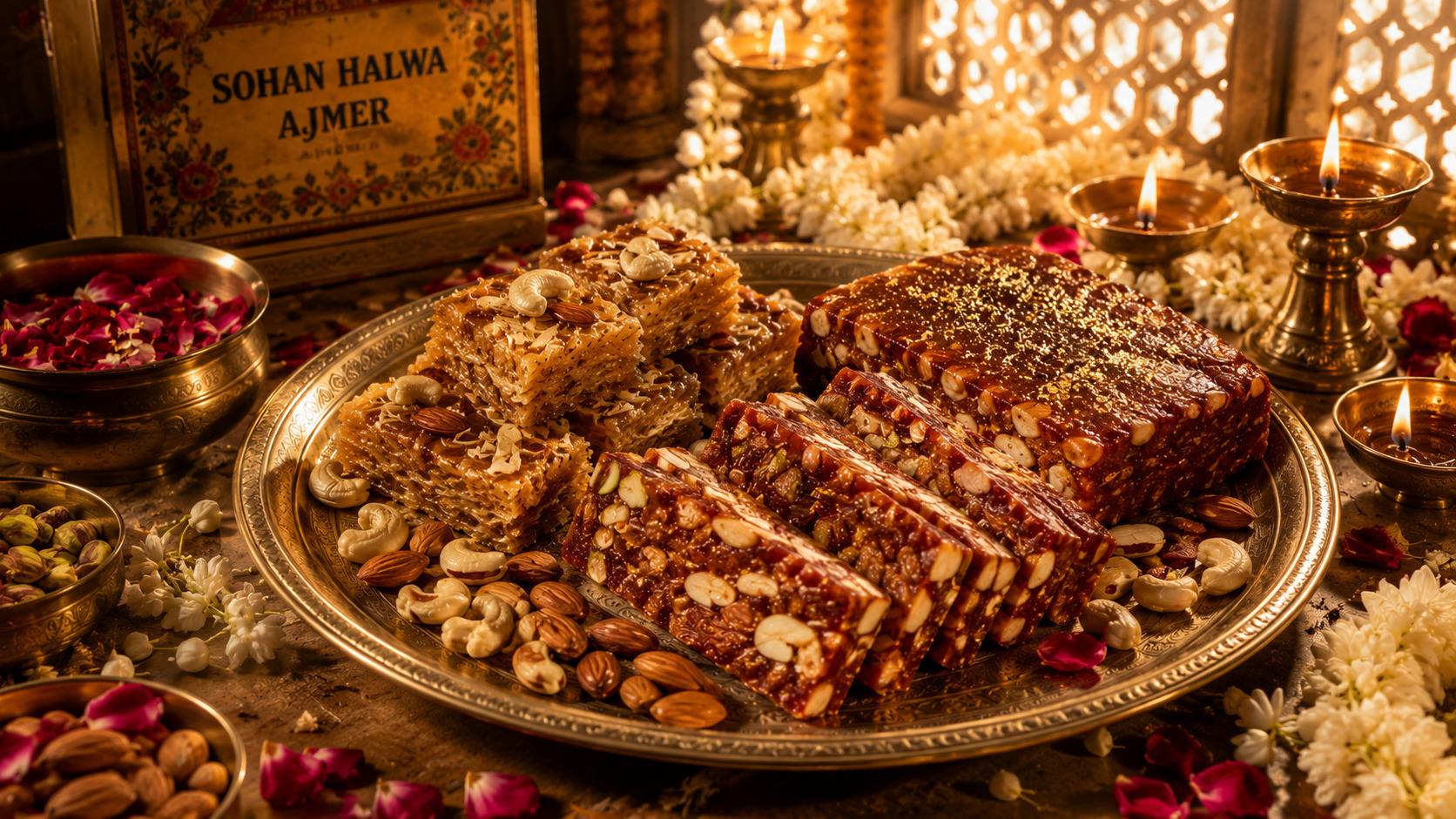
Among sweet connoisseurs and gift-givers in India, Mix Dry Fruit Karachi Halwa has earned a reputation as the premium choice for special occasions. Whether it is Eid, Diwali, a wedding, or a corporate gift, a beautifully packaged box of Mix Dry Fruit Karachi Halwa from Ajmer communicates thoughtfulness, taste, and generosity simultaneously.
The nutritional richness of this variant also adds to its appeal, each piece is a powerhouse of healthy fats, antioxidants, and natural energy, making it a relatively guilt-free indulgence compared to many other mithai options.
Sohan Halwa Ajmer-The Grand Patriarch of Indian Sweets
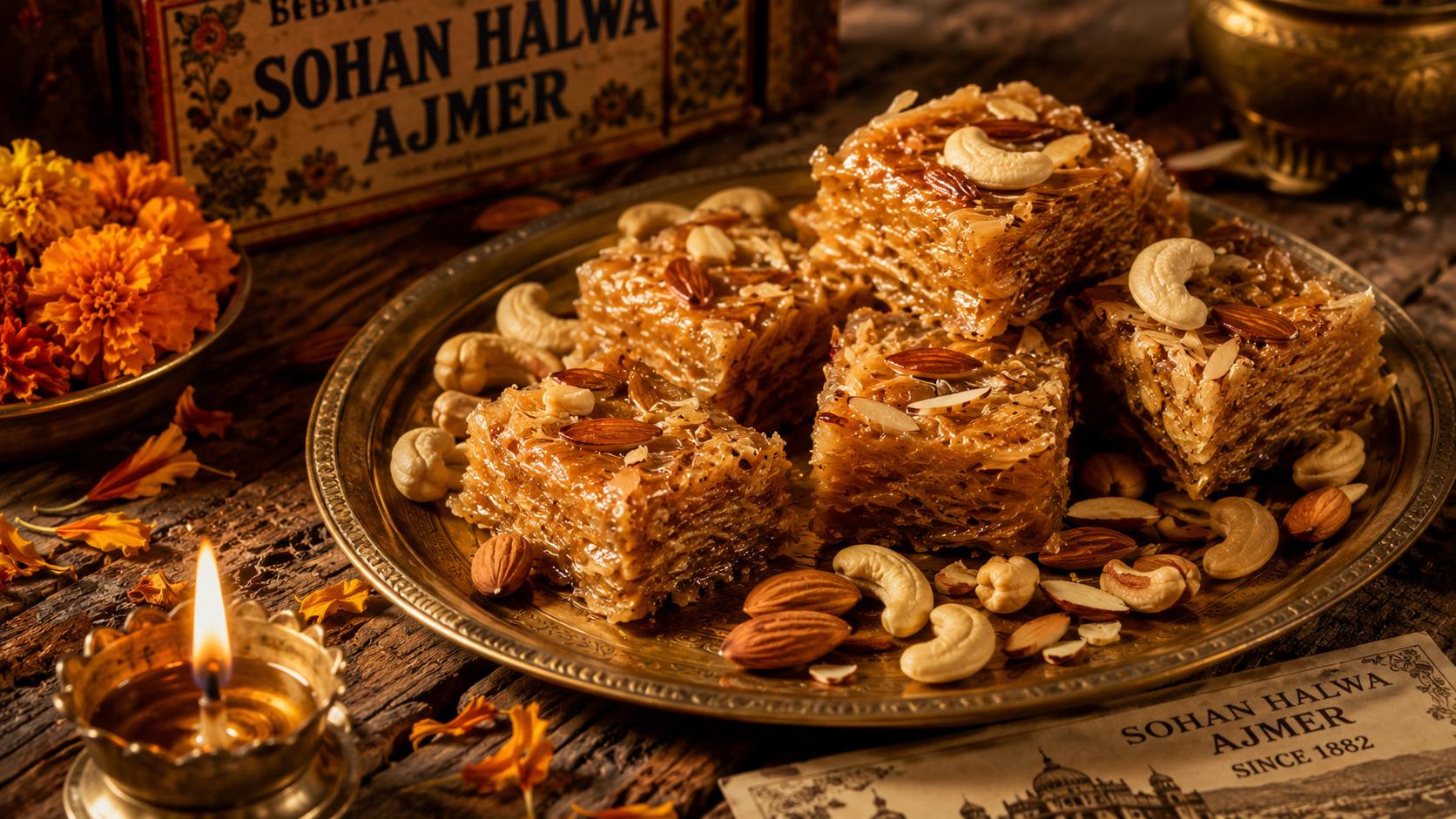
No discussion of Ajmer's sweet legacy would be complete without an extended tribute to Sohan Halwa Ajmer, perhaps the most historically significant sweet in the city's repertoire. Sohan Halwa is a dense, brittle-yet-chewy confection made from wheat flour (or maida), ghee, sugar, milk, and a generous selection of dry fruits and nuts.
The origins of Sohan Halwa are often traced to the Mughal era, with some historians suggesting it was a court sweet served to royalty. Over time, Multan in Punjab became its most famous production centre, but the Ajmer variant, shaped by local ingredients and the unique water of the region, developed its own distinct identity.
What Makes Ajmer's Sohan Halwa Unique?
Ajmer's Sohan Halwa is distinguished by several regional characteristics:
A slightly harder texture compared to Multani variants, offering more resistance to the bite before yielding
A more pronounced ghee flavour, reflective of Rajasthani culinary traditions
Generous layering of whole cashews, almonds, and pistachios throughout the sweet
A longer shelf life due to the lower moisture content, making it ideal for long-distance shipping and gifting
Trusted establishments like Azad Sweets in Ajmer have been producing Sohan Halwa using time-honoured recipes for generations, maintaining consistent quality that has won them a loyal customer base across India.
Azad Sweets Ajmer-The Benchmark of Authenticity
When we discuss authentic Ajmer sweets online, the name Azad Sweets appears with notable consistency. Established in the lanes near the Dargah Sharif, Azad Sweets has grown from a local sweet shop into a recognised brand whose products are now available across India through platforms like Deliciouskart.
What sets Azad Sweets apart is their commitment to traditional recipes and premium ingredients. They do not compromise on the quality of their ghee, their dry fruits, or their cornflour base. Every batch is prepared with the same care that characterised their early years, ensuring that a box of their halwa purchased in Delhi or Bengaluru delivers the same authentic Ajmer experience as buying it in person from their shop.
The Cultural Significance of Halwa in Indian Celebrations
Sweets occupy a sacred space in Indian culture. They are distributed at births, offered at temples, exchanged at festivals, and served at weddings. Among all sweets, halwa holds a particularly elevated position, it is both prasad (divine offering) and celebratory food, transcending religious boundaries with ease.
In Rajasthan, and especially in a pilgrimage city like Ajmer, sweets carry spiritual connotations. Sohan Halwa and Karachi Halwa from Ajmer are among the most popular items distributed as prasad and taken home as blessings by pilgrims. This association with the sacred enhances their cultural value considerably.
Halwa and the Festival Calendar
Across India's festival calendar, these Ajmer halwas find their moment of glory:
Eid-ul-Fitr: Karachi Halwa is exchanged as a celebratory sweet across Muslim households
Diwali: Gift boxes of Sohan Halwa and Mix Dry Fruit Karachi Halwa are enormously popular
Marriages and Engagements: Premium halwa boxes serve as traditional mithai gifts from the groom's side
Urs at Ajmer Dargah: The annual Urs celebration sees massive demand for all varieties of Ajmer halwa
How to Identify Authentic Pista Karachi Halwa
As the popularity of Pista Karachi Halwa from Ajmer has grown, so has the market for inferior imitations. We believe it is important for discerning consumers to know what genuine quality looks and tastes like. Here are the markers of authenticity:
-
Colour Depth: Authentic Pista Karachi Halwa has a rich, even green colour. Pallid or blotchy colouring often indicates lower quality ingredients or rushed preparation.
-
Pista Visibility: Genuine Pista Karachi Halwa is generously studded with identifiable pistachio pieces, not just a light dusting of pista powder on the surface.
-
Texture on Bite: The halwa should be firm but not hard. It should have a slight chew and dissolve slowly on the tongue.
-
Aroma: A faint, pleasant fragrance of ghee, cardamom, and rose water should be detectable even before the first bite.
-
After-Taste: The after-taste should be clean and pleasant, not artificial, not excessively sweet, not greasy.
-
Labelling and Source: Trusted sources like Azad Sweets Ajmer, available through platforms such as Deliciouskart, provide clear ingredient labelling and verifiable provenance.
Buying Ajmer Halwa Online-What You Need to Know
The growth of e-commerce platforms dedicated to regional Indian food has been transformative for sweets like Sohan Halwa Ajmer, Pista Karachi Halwa, and Mix Dry Fruit Karachi Halwa. Where once you had to physically travel to Ajmer or depend on a friend making the pilgrimage, today these sweets are accessible across India with a few clicks.
What to Look for When Buying Online
Shelf Life: Authentic Ajmer halwas have a natural shelf life of 30–60 days without preservatives, owing to the high sugar and ghee content.
Packaging: Look for vacuum-sealed or airtight packaging that preserves freshness during transit.
Weight Accuracy: Reputable sellers like those on Deliciouskart offer standard 500g packs with accurate net weight labelling.
Customer Reviews: Genuine reviews from verified buyers provide invaluable quality signals.
Return and Freshness Guarantee: Trustworthy platforms offer freshness guarantees or easy replacement for damaged goods.
For Indian consumers seeking guaranteed authenticity, the Deliciouskart platform offers a curated selection of Ajmer's finest sweets, directly sourced from established local producers like Azad Sweets.
The Growing Trend: Why India Is Rediscovering Traditional Sweets
Across India, there is a notable and well-documented resurgence of interest in traditional, regional sweets. As urban consumers grow wary of mass-produced confections laden with artificial flavours and preservatives, they are turning back to the authentic, the artisanal, and the heritage-driven.
This trend, often discussed in the context of the broader "return to roots" movement in Indian food culture, has directly benefited products like Pista Karachi Halwa and Sohan Halwa Ajmer. Google Trends data consistently shows rising search volumes for specific regional sweets, with Ajmer-origin products showing particularly strong year-on-year growth in searches from metro cities including Delhi, Mumbai, Bengaluru, and Hyderabad.
Social media has also played a powerful role. Reels and short videos showcasing the making of Karachi Halwa at traditional Ajmer shops have garnered millions of views, introducing younger generations to a sweet they might otherwise have encountered only at grandparents' homes.
Conclusion: A Sweet That Earns Its Place in Every Indian Home
The question we set out to answer, what makes Pista Karachi Halwa so delicious, does not have a single answer. It is the quality of the pistachios, certainly. It is the skill of the halwai and the hours spent over a hot kadhai, certainly. But it is also something less tangible: the weight of tradition, the perfume of a pilgrimage city, and the extraordinary fact that a recipe refined over generations can still deliver genuine pleasure in the twenty-first century.
Whether you are discovering Sohan Halwa Ajmer for the first time, savouring the nuttiness of Pista Karachi Halwa, or indulging in the luxurious complexity of Mix Dry Fruit Karachi Halwa, you are participating in a living tradition, one that connects you to Ajmer's extraordinary sweet-making heritage.
We encourage you to seek out authentic sources, to read labels carefully, and to choose quality over quantity. A smaller portion of genuinely fine halwa from a trusted producer is infinitely more satisfying than a larger amount of an inferior imitation. In Ajmer's sweets, as in life, authenticity is everything.
Key Takeaways
Pista Karachi Halwa is distinguished by its unique texture, firm yet yielding, and its generous use of premium pistachios throughout the preparation.
Sohan Halwa Ajmer is a historically significant sweet with Mughal-era origins, characterised by a dense, brittle-chewy texture and rich ghee flavour unique to the Ajmer region.
Mix Dry Fruit Karachi Halwa represents the premium tier of Ajmer sweets, incorporating a variety of dry fruits for a multi-layered nutritional and flavour profile.
The artisanal production process, involving hours of continuous stirring, staged ghee addition, and precise temperature management, is central to the quality of authentic Ajmer halwas.
Established producers like Azad Sweets Ajmer, available through Deliciouskart, offer a reliable pathway to authentic Ajmer halwas for consumers across India.
Indian consumers are increasingly rediscovering regional and traditional sweets, with Ajmer-origin products showing strong demand growth across metro cities.
When buying online, prioritise sellers who offer clear labelling, vacuum-sealed packaging, accurate weight, and verified customer reviews to ensure product authenticity.
These sweets carry deep cultural and spiritual significance in India, particularly in the context of Ajmer's identity as a pilgrimage city and culinary heritage hub.
Frequently Asked Questions (FAQs)
Q: What is the difference between Pista Karachi Halwa and regular Karachi Halwa?
A: The primary difference lies in the featured ingredient. While regular Karachi Halwa may use a basic dry fruit mixture or no dry fruits at all, Pista Karachi Halwa specifically showcases premium pistachios as the star element, both incorporated into the batter and used as a generous topping. This gives it a distinctly nuttier flavour profile, a richer green colour, and a more premium overall character. Pista Karachi Halwa also tends to be priced higher due to the cost of quality pistachios.
Q: How long does Ajmer Karachi Halwa stay fresh, and what is the best way to store it?
A: Authentic Pista Karachi Halwa from Ajmer typically remains fresh for 25 to 45 days when stored correctly. The high sugar and ghee content act as natural preservatives. For best results, store in an airtight container at room temperature, away from direct sunlight and moisture. Refrigeration is not recommended as it can harden the texture significantly. If refrigerated, always bring to room temperature before serving for the optimal texture experience.
Q: Is Sohan Halwa Ajmer the same as Multani Sohan Halwa?
A: No, while they share common roots, Sohan Halwa Ajmer and Multani Sohan Halwa are distinctly different products. Multani Sohan Halwa (from Multan, now Pakistan) is generally softer, sometimes slightly sticky, and uses a particular combination of wheat starch and milk. Ajmer's Sohan Halwa tends to be firmer, with a more pronounced ghee fragrance and a distinctly Rajasthani character in its ingredient ratios and dry fruit selection. Locals and connoisseurs consider them complementary rather than interchangeable.
Q: Can I order Pista Karachi Halwa and Mix Dry Fruit Karachi Halwa online across India?
A: Yes. Authentic Pista Karachi Halwa and Mix Dry Fruit Karachi Halwa from Azad Sweets Ajmer are available for pan-India delivery through Deliciouskart (deliciouskart.com). Products are packaged to maintain freshness during transit and arrive in airtight, tamper-evident packaging. The standard size available is 500g, suitable for personal consumption, gifting, or sharing during celebrations.
Q: What makes Ajmer a centre for halwa production specifically?
A: Ajmer's position as a major pilgrimage destination created a steady and large demand for quality sweets over centuries. Pilgrims visiting the Dargah Sharif of Hazrat Khwaja Moinuddin Chishti brought with them culinary traditions from across South Asia. Local halwais absorbed these influences and adapted them using locally available ingredients. Over generations, this cross-pollination of culinary knowledge, combined with the competitive pressure of a discerning, high-volume market, produced a tradition of sweet-making excellence that is now Ajmer's cultural hallmark.
Q: Is Mix Dry Fruit Karachi Halwa a good gifting option for Indian festivals?
A: Absolutely. Mix Dry Fruit Karachi Halwa from Ajmer is considered one of the most premium and thoughtful gifting options available in the Indian mithai category. Its long shelf life, distinctive flavour, regional provenance, and visual appeal make it appropriate for Diwali, Eid, Holi, Raksha Bandhan, weddings, corporate gifting, and personal celebrations. The combination of multiple premium dry fruits communicates generosity and care, making it culturally appropriate across communities and occasions.
Q: Are these Ajmer halwas suitable for vegetarians?
A: Yes. All three products, Sohan Halwa Ajmer, Pista Karachi Halwa, and Mix Dry Fruit Karachi Halwa, are 100% vegetarian. They are made from plant-based and dairy ingredients only: flour, ghee, milk solids (in some preparations), sugar, dry fruits, and natural flavourings. They contain no meat, poultry, seafood, or eggs. Consumers with specific dietary requirements (such as those following a strictly vegan diet) should note that these sweets contain ghee, a dairy derivative.
Q: What is the approximate price of authentic Pista Karachi Halwa from Ajmer?
A: Pricing varies based on the quality of ingredients and the producer, but authentic Pista Karachi Halwa from a reputed Ajmer producer like Azad Sweets is typically priced in the mid-to-premium segment of the Indian mithai market. A 500g pack is generally sufficient for a small family celebration or a thoughtful personal gift. For current pricing, we recommend checking directly on Deliciouskart, where Azad Sweets Ajmer's products are listed with up-to-date prices and availability.
Some flavours carry the soul of a city. Bring home the taste of Ajmer today, because the finest Pista Karachi Halwa and Sohan Halwa deserve to be savoured, not just remembered. Taste Ajmer's Legacy on Deliciouskart